
- English
- Español
- Português
- русский
- Français
- 日本語
- Deutsch
- tiếng Việt
- Italiano
- Nederlands
- ภาษาไทย
- Polski
- 한국어
- Svenska
- magyar
- Malay
- বাংলা ভাষার
- Dansk
- Suomi
- हिन्दी
- Pilipino
- Türkçe
- Gaeilge
- العربية
- Indonesia
- Norsk
- تمل
- český
- ελληνικά
- український
- Javanese
- فارسی
- தமிழ்
- తెలుగు
- नेपाली
- Burmese
- български
- ລາວ
- Latine
- Қазақша
- Euskal
- Azərbaycan
- Slovenský jazyk
- Македонски
- Lietuvos
- Eesti Keel
- Română
- Slovenski
- मराठी
- Srpski језик

Why Are High Voltage Circuit Breakers Essential for Transformer Protection?
Imagine a power transformer—a massive, silent sentinel at the heart of an electrical substation—suddenly struck by a lightning surge or a catastrophic short circuit. In a fraction of a second, the transformer's internal insulation could fail, the winding could overheat, and the resulting explosion could damage the entire substation, plunging thousands of homes and businesses into darkness. The only thing standing between this scenario and normal, reliable operation is a device we often take for granted: the High Voltage Circuit Breaker. This device is not just a switch; it is a high-speed, high-fidelity protective relay that must detect a fault, make a decision, and interrupt a current that could be tens of thousands of amperes—all within a time window measured in milliseconds. Without it, the transformer, one of the most expensive and critical assets in the power grid, would be left vulnerable to the very forces it was designed to harness.
The essential role of the High Voltage Circuit Breaker in transformer protection is not a matter of convenience; it is a matter of survival for the grid. A transformer is a complex, delicate piece of equipment. Its core is a labyrinth of copper windings and insulation that operates at high temperatures and under immense electrical stress. A fault current, if allowed to persist, generates heat that can melt the copper and vaporize the oil, creating a violent arc flash that can destroy the transformer. The High Voltage Circuit Breaker acts as the ultimate guardian. It is the only device that can quickly and decisively isolate a transformer from a fault, preventing a localized problem from cascading into a systemic failure. This article will dissect the technical, economic, and operational reasons why this essential component is so indispensable. We will also explore how our High Voltage Circuit Breaker solutions at Lugao Power Co.,Ltd. are engineered to provide the speed, reliability, and precision needed to safeguard these critical assets.
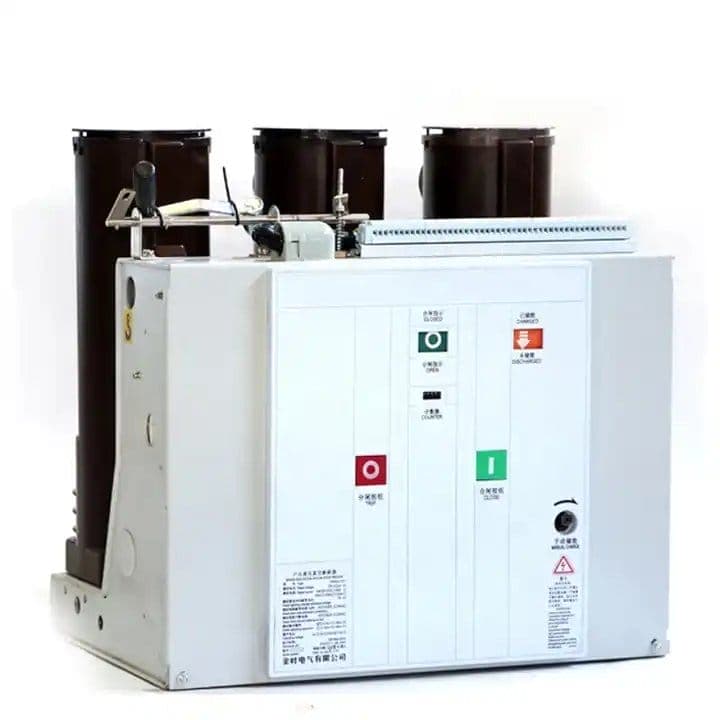
Table of Contents
- 1. What Is a High Voltage Circuit Breaker and How Does It Protect Transformers?
- 2. Why Are Transformers Vulnerable to Faults Without Proper Protection?
- 3. How Do Different Types of High Voltage Circuit Breakers Compare for Transformer Protection?
- 4. What Technical Parameters Define a High-Performance Circuit Breaker?
- 5. How Does Modern Control and Monitoring Enhance Circuit Breaker Effectiveness?
- Frequently Asked Questions (FAQ)
- Conclusion
What Is a High Voltage Circuit Breaker and How Does It Protect Transformers?
A High Voltage Circuit Breaker is a specialized switching device designed to interrupt fault currents—the massive, uncontrolled surges of electricity that occur during a short circuit—and to isolate a section of the power grid, such as a transformer, from the rest of the system. It is not a simple on/off switch. It is a high-stakes, high-speed interrupter that must perform its function with extreme precision. The transformer, which is the core asset we are protecting, is a device that steps voltage up or down. While it operates normally, a High Voltage Circuit Breaker remains in the closed position, allowing current to flow. However, the moment a fault is detected—typically by a relay that monitors current, voltage, or differential signals—the circuit breaker must open, extinguishing the arc that forms between its contacts as they separate. The critical task is to clear the fault before it can cause thermal or mechanical damage to the transformer. For a large power transformer, this clearing time is often less than 100 milliseconds. To put this in perspective, a human eye blink takes about 300 to 400 milliseconds. The High Voltage Circuit Breaker must act faster than the blink of an eye to protect a machine that can weigh hundreds of tons.
The physics of this interruption is where the engineering challenge becomes apparent. When a circuit breaker opens, an arc forms between the separating contacts. This arc is essentially a plasma—a highly conductive channel of ionized gas that, left unchecked, would continue to conduct current indefinitely. To extinguish this arc, the circuit breaker must, in a fraction of a second, cool and de-ionize the arc path. Different circuit breaker designs use different techniques. An SF6 (sulfur hexafluoride) circuit breaker uses a flow of compressed SF6 gas to cool the arc and flush away the ionized particles, relying on SF6's exceptional insulating properties to then withstand the system voltage. A vacuum circuit breaker relies on the high dielectric strength of a vacuum to quench the arc. A high-end oil circuit breaker, though older technology, uses the gas generated by the vaporization of oil to cool and extinguish the arc. All of these methods must achieve the same result: zero current at the next natural current zero of the AC waveform, and then a rapid recovery of dielectric strength to prevent a re-strike. At Lugao, our High Voltage Circuit Breaker solutions are built on a deep understanding of these arc-quenching physics, ensuring that our breakers are not just reliable, but predictable in their performance.
To truly grasp the transformer protection role, it is helpful to think about what a transformer does. It is an inductive device. It stores energy in its magnetic field. When a fault occurs on the secondary side of a transformer, the energy from the primary side is suddenly dumped into the fault. The transformer sees a huge current, which it cannot handle. This is when the High Voltage Circuit Breaker comes into play. It is typically placed on the primary side, the high voltage side, of the transformer. Its job is to disconnect the transformer from the upstream source of power, so the fault is effectively fed only by the inertia of the generator. By isolating the transformer from the high voltage bus, the circuit breaker prevents the fault current from escalating to the point where the transformer would be damaged. A transformer without a properly functioning High Voltage Circuit Breaker is like a car without brakes; it might work for a while, but when something goes wrong, the consequences are catastrophic. Our factory has designed a range of High Voltage Circuit Breaker products that are specifically tailored for transformer protection, offering a range of options for different voltage and current ratings, application requirements, and environmental conditions.
Why Are Transformers Vulnerable to Faults Without Proper Protection?
The vulnerabilities of a power transformer are rooted in its fundamental design and the materials it uses. A typical large power transformer is a complex assembly of copper windings, cellulose-based insulation, and transformer oil. This combination is designed for efficient operation under a narrow range of normal conditions. However, it is inherently susceptible to a wide range of fault types, many of which can be catastrophic if not addressed immediately and automatically by a High Voltage Circuit Breaker. To understand this vulnerability, you have to appreciate the physics of a transformer failure. A short circuit on the transformer's output (secondary) side is the most common scenario. If the secondary is shorted, the primary side draws a current that is theoretically limited only by the transformer's impedance, which is relatively low. This fault current can be 10 to 20 times the normal full-load current. The result is a sudden and extreme heating of the windings, which can melt the copper and cause the insulation to break down. The rapid expansion of the oil due to the heat can generate explosive gases, leading to a violent failure. A High Voltage Circuit Breaker must detect this current surge and disconnect the transformer before the temperature of the winding reaches a critical level.
Beyond short circuits, transformers are also vulnerable to other, more insidious threats. These include lightning strikes, which can cause a voltage surge that breaks down the insulation, and ferroresonance, a phenomenon that can cause overvoltages and overcurrents when the transformer is energized or de-energized. They are also vulnerable to overloading, which can cause the windings to gradually overheat and degrade the insulation. Even something as simple as a fault in the tap changer, which adjusts the transformer's voltage ratio, can cause a catastrophic failure. In every case, the common thread is that a fault or abnormal condition, if allowed to persist for even a few cycles, can cause permanent and irreparable damage to the transformer. This is why the High Voltage Circuit Breaker is so important: it is not a reactive measure, but a proactive one. It is the only device that can prevent the inevitable consequences of a fault from occurring by safely isolating the transformer from the power system.
Moreover, transformers are not just vulnerable to internal faults. They are also subject to faults in the connected network. A fault in a distribution feeder that is connected to the transformer's secondary side will be reflected on the primary side. The transformer will see the fault current and will try to feed it. This is where the coordination of protection systems becomes critical. The High Voltage Circuit Breaker on the primary side of the transformer is part of a chain of devices that are designed to operate in a coordinated manner. For example, a fuse or recloser on the secondary side might clear a transient fault, but for a more serious fault, the primary circuit breaker must operate to protect the transformer. Without this coordination, a fault on the secondary side could cause the primary circuit breaker to trip unnecessarily, leading to an outage for a much larger area. This is why the protection of a transformer is a system-level problem, and the High Voltage Circuit Breaker is the central, critical component of that system. At Lugao Power Co.,Ltd., we have a deep understanding of these coordination principles, and we design our High Voltage Circuit Breaker solutions to be fully compatible with a wide range of protection schemes, ensuring seamless integration and optimal performance.
How Do Different Types of High Voltage Circuit Breakers Compare for Transformer Protection?
When selecting a High Voltage Circuit Breaker for transformer protection, engineers must consider the specific application and choose between different technologies: SF6, vacuum, and oil circuit breakers. Each type has its own unique set of characteristics that make it suitable for different voltage and current ranges. For decades, oil circuit breakers were the standard, but they have been largely superseded by SF6 and vacuum technologies due to their superior performance and maintenance characteristics. However, understanding the history and the evolution of the technology helps to appreciate the modern solutions available today.
Oil Circuit Breakers are the oldest of the three. They rely on the arc being drawn in oil, which cools the arc and generates hydrogen gas that helps to extinguish it. While they are robust and have a relatively high interrupting capacity, they are large, heavy, and require regular maintenance to replenish the oil and remove carbon deposits. They also pose an environmental and fire hazard due to the oil. At Lugao, we no longer manufacture oil circuit breakers for new installations, but we provide support for existing ones.
Vacuum Circuit Breakers are more modern and offer several advantages. They use a sealed vacuum chamber to extinguish the arc. Without a medium to sustain combustion, the arc is quickly quenched when the contacts separate. This results in a very compact and lightweight design, with long maintenance intervals. However, vacuum breakers are generally limited to voltages up to about 72 kV. For higher voltages, their design becomes complicated and expensive. They are often used in distribution substations and industrial applications. The main advantage for transformer protection is their speed and reliability, but they are typically not suitable for the highest voltage levels found in transmission systems.
SF6 Circuit Breakers represent the modern standard for high-voltage applications. These breakers use sulfur hexafluoride gas, which has exceptional insulating and arc-quenching properties. The gas is compressed and blown across the arc to cool it and break the current. SF6 circuit breakers have a very high interrupting capacity and can operate effectively at the highest transmission voltages. They also have very low maintenance requirements. Our factory at Lugao Power Co.,Ltd. has specialized in manufacturing SF6 High Voltage Circuit Breaker for over 15 years, and we have refined the design to ensure maximum reliability. The table below provides a comparative analysis of these three types.
| Parameter | Oil Circuit Breaker | Vacuum Circuit Breaker | SF6 Circuit Breaker |
| Operating Voltage Range | Up to 245 kV | Up to 72 kV | Up to 800 kV+ |
| Interrupting Current Capability | High | Moderate | Very High |
| Service Life (Operations) | 10,000 | 30,000 | 20,000+ |
| Maintenance Requirement | High | Low | Very Low |
| Environmental Impact | High (oil spill risk) | Low | Low (SF6 is a greenhouse gas) |
| Typical Application | Older substations | Distribution, industrial | Transmission, large substations |
For modern transformer protection, the SF6 High Voltage Circuit Breaker is the recommended choice for most high-voltage applications due to its superior performance, reliability, and low maintenance requirements. Our factory has produced thousands of SF6 units that are currently protecting critical transformers around the world. The SF6 technology provides the most robust protection, and it is the technology that we continue to develop and refine at Lugao.
What Technical Parameters Define a High-Performance Circuit Breaker?
To truly understand the protection provided by a High Voltage Circuit Breaker, you need to look at its key technical specifications. These parameters are not just numbers on a datasheet; they are the metrics that define the device's ability to protect the transformer. The primary specifications are the rated voltage, the rated current, the rated short-circuit breaking current, and the rated short-circuit making current. These parameters, combined with the operating time and the transient recovery voltage (TRV) capability, define the circuit breaker's performance envelope. At Lugao Power Co.,Ltd., we have a comprehensive set of technical parameters for each of our High Voltage Circuit Breaker models, and we can customize them to meet specific customer requirements.
Rated Voltage is the highest voltage for which the circuit breaker is designed. It must be at least the system voltage. Rated Current is the continuous current the breaker can carry without overheating. This must be equal to or greater than the normal load current of the transformer. Rated Short-Circuit Breaking Current is the maximum fault current the breaker can interrupt. This is the most critical parameter for transformer protection. It must be high enough to handle the maximum possible fault current that could flow through the transformer. If the circuit breaker has a breaking current rating that is too low, it could fail to interrupt a high-current fault, leading to the destruction of the transformer. Rated Short-Circuit Making Current is the maximum peak current the breaker can close onto, which is important in applications where the breaker might be closed onto a fault. The operating time is the time it takes for the breaker to open after receiving a trip signal. For transformer protection, a faster operating time is always better, as it limits the amount of energy that can be dissipated in the transformer during a fault. The Transient Recovery Voltage (TRV) is the voltage that appears across the circuit breaker contacts immediately after the current is interrupted. The TRV waveform is determined by the system's inductance and capacitance. A circuit breaker must be able to withstand this TRV without restriking.
The table below summarizes the typical technical parameters for a High Voltage Circuit Breaker used in a substation environment.
| Parameter | Value for Typical 145 kV Transformer | Value for Typical 245 kV Transformer | Importance for Protection |
| Rated Voltage | 145 kV | 245 kV | Must match system voltage |
| Rated Current | 3150 A | 4000 A | Must handle full load current |
| Rated Short-Circuit Breaking Current | 40 kA | 63 kA | Must exceed potential fault current |
| Rated Short-Circuit Making Current | 100 kA (peak) | 158 kA (peak) | Must close without damage |
| Operating Time (typical) | 30-40 ms | 30-40 ms | Faster is better |
| Transient Recovery Voltage (peak) | ~200 kV | ~300 kV | Must handle voltage surge |
The selection of a High Voltage Circuit Breaker with the correct parameters is not a trivial task. It requires a detailed analysis of the transformer's fault current, which is determined by the system impedance and the transformer's rating. Overestimating the parameters leads to higher costs and unnecessary over-specification. Underestimating them can lead to catastrophic failure. Our engineering team at Lugao Power Co.,Ltd. provides detailed technical support to our customers, helping them to select the appropriate High Voltage Circuit Breaker for their specific transformer protection needs.
How Does Modern Control and Monitoring Enhance Circuit Breaker Effectiveness?
The High Voltage Circuit Breaker is no longer just a mechanical switch. Modern versions are integrated with sophisticated control and monitoring systems that significantly enhance their effectiveness in protecting transformers. These systems are the nervous system of the breaker, providing real-time feedback, diagnostics, and the ability to adapt to changing conditions. The core of this technology is the protection relay, a device that continuously monitors current and voltage signals from the transformer and the grid. When it detects a fault, it sends a trip signal to the breaker's operating mechanism. The relay is the intelligence that decides when to operate and the circuit breaker is the muscle that executes the action. Without the relay, the breaker is blind. Without the breaker, the relay is impotent. The integration of these two systems is what makes modern transformer protection so effective.
Modern protection relays can be programmed with sophisticated algorithms that distinguish between different types of faults, such as a short circuit, a ground fault, or an overload. This intelligence prevents nuisance tripping, where the breaker opens for a non-critical event, which is crucial for maintaining a stable power supply. They also use communication protocols, such as IEC 61850, to share information with other relays in the substation, enabling a coordinated protection scheme. This communication allows the system to isolate only the affected part of the network, minimizing the impact of an outage. For a transformer, this means that if the fault is on the secondary side, the primary breaker can be designed to only trip after the secondary breakers have failed to clear it, providing a backup layer of protection.
Beyond the relay, modern circuit breakers are also equipped with condition monitoring sensors. These sensors measure parameters such as the operating time, the travel of the contacts, the gas pressure (for SF6 breakers), and the temperature of the contacts. This data is continuously collected and analyzed to provide a diagnostic assessment of the circuit breaker's health. The data can be used to predict failures before they occur, enabling proactive maintenance that can significantly extend the life of the device. For a transformer protection circuit breaker, this means that the breaker's effectiveness is more predictable and reliable. At Lugao Power Co.,Ltd., we have developed a proprietary condition monitoring system for our High Voltage Circuit Breaker products. This system provides our customers with a complete view of their breaker's health, allowing them to plan maintenance more effectively and reducing the risk of unplanned outages. By combining the physical robustness of our circuit breakers with the diagnostic power of modern monitoring, we are able to offer a protection solution that is not only reliable, but also intelligent.
Frequently Asked Questions (FAQ)
Question 1: How long does a High Voltage Circuit Breaker take to open and clear a fault?
Answer: For a modern High Voltage Circuit Breaker, the total clearing time—from the start of the fault current to the final interruption of the arc—is typically between 30 and 50 milliseconds. This is about the same time as a human eye blink. The circuit breaker must open fast enough to prevent the transformer from overheating and to protect the rest of the grid from the fault current. Our High Voltage Circuit Breaker products at Lugao Power Co.,Ltd. are engineered to achieve these fast opening times, ensuring the transformer is protected effectively.
Question 2: What is the difference between a circuit breaker and a disconnect switch?
Answer: A circuit breaker is designed to interrupt fault currents and protect equipment. A disconnect switch is designed to isolate a circuit for maintenance and is not rated to break fault currents. A disconnect switch is only operated when the circuit is de-energized, usually after the circuit breaker has opened. The circuit breaker is the active protection device, while the disconnect switch is a safety device for isolation. Both are essential for a safe and functional substation, but they serve very different roles.
Question 3: How often should a High Voltage Circuit Breaker be maintained?
Answer: The maintenance interval depends on the type of breaker and the manufacturer's recommendations. For an SF6 High Voltage Circuit Breaker, maintenance is typically required every 10 to 15 years or after a certain number of operations, whichever comes first. This includes checking the SF6 gas pressure, operating mechanism, and contact condition. For vacuum breakers, the interval can be even longer. Our factory at Lugao Power Co.,Ltd. provides detailed maintenance schedules and recommendations for all our High Voltage Circuit Breaker products, helping our customers extend their operational life.
Question 4: What happens if a High Voltage Circuit Breaker fails to open during a fault?
Answer: If a circuit breaker fails to open, a backup protection system, known as "breaker failure protection," will operate. This will typically trip all other circuit breakers that are connected to the same bus, isolating the entire section of the substation. This is a last resort to prevent a catastrophic failure, and it results in a wider power outage. This is why the reliability of the primary High Voltage Circuit Breaker is so important, and why we at Lugao Power Co.,Ltd. place such a strong emphasis on quality and testing in our manufacturing process.
Question 5: Can a High Voltage Circuit Breaker be used to protect a transformer from internal faults?
Answer: Yes, but it requires a differential protection relay. This relay measures the current entering and leaving the transformer. In a normal condition, these currents are equal. If there is an internal fault, the currents will differ, and the relay will trip the High Voltage Circuit Breaker. This is the primary protection for an internal transformer fault. Our High Voltage Circuit Breaker solutions are designed to be fully compatible with differential protection schemes.
Conclusion
A High Voltage Circuit Breaker is not just a piece of equipment; it is the essential guardian of the power transformer and, by extension, the entire power grid. It is the only device that can detect a catastrophic fault and interrupt the massive currents that would otherwise destroy the transformer. The modern High Voltage Circuit Breaker, particularly the SF6 technology we specialize in at Lugao Power Co.,Ltd., has evolved into a sophisticated, intelligent, and highly reliable component. Its design is a blend of physics, advanced materials, and precise manufacturing, all working together to ensure that the transformer is protected in the most critical of circumstances. The transformer is often the most expensive and critical asset in a substation, and its protection cannot be left to chance. It requires a circuit breaker that is not just fast, but reliable, repeatable, and predictable.
At Lugao Power Co.,Ltd., we understand the critical role that our High Voltage Circuit Breaker products play in ensuring the reliability of the grid. That is why we invest so heavily in research, development, and quality control. Our factory is dedicated to producing circuit breakers that not only meet but exceed the most stringent international standards. If you are looking to upgrade your transformer protection, or if you are planning a new substation, we invite you to reach out to us. Let us discuss your specific requirements and how our High Voltage Circuit Breaker solutions can provide the protection you need. Contact Lugao Power Co.,Ltd. today for a no-obligation consultation and discover the difference that a truly reliable High Voltage Circuit Breaker can make for your transformer protection.