
- English
- Español
- Português
- русский
- Français
- 日本語
- Deutsch
- tiếng Việt
- Italiano
- Nederlands
- ภาษาไทย
- Polski
- 한국어
- Svenska
- magyar
- Malay
- বাংলা ভাষার
- Dansk
- Suomi
- हिन्दी
- Pilipino
- Türkçe
- Gaeilge
- العربية
- Indonesia
- Norsk
- تمل
- český
- ελληνικά
- український
- Javanese
- فارسی
- தமிழ்
- తెలుగు
- नेपाली
- Burmese
- български
- ລາວ
- Latine
- Қазақша
- Euskal
- Azərbaycan
- Slovenský jazyk
- Македонски
- Lietuvos
- Eesti Keel
- Română
- Slovenski
- मराठी
- Srpski језик

How Do High Voltage Circuit Breakers Ensure Personnel Safety in Substations?
Imagine standing in the humming heart of a modern electrical substation. The air is thick with potential energy—megawatts of power flowing through massive transformers, ready to light up a city. For the engineers and technicians who work here, the greatest fear isn't a power outage; it's the catastrophic release of that energy in the form of an arc flash. In such a high-stakes environment, the High Voltage Circuit Breaker is not just a switching device; it is the ultimate bodyguard. It stands between the raw force of electricity and the safety of the personnel who maintain the grid. But how exactly does this piece of engineering perform its life-saving duty?
The answer lies in a combination of split-second physics, robust mechanical interlocks, and failsafe control systems. A High Voltage Circuit Breaker ensures personnel safety not by being a passive barrier, but by acting as an active guardian that predicts, isolates, and neutralizes threats before they can reach human operators. Unlike a standard switch, it operates in a vacuum of high-pressure arc-quenching gas (like SF6) or oil, capable of extinguishing a plasma arc in milliseconds. However, the true measure of safety is in the design philosophy that prioritizes human protection at every level—from the physical separation of live parts to the logical isolation of control circuits. Our factory at Lugao has spent decades perfecting these safety hierarchies, ensuring that every High Voltage Circuit Breaker we produce is a bastion of security for the men and women who work on the front lines of power distribution.
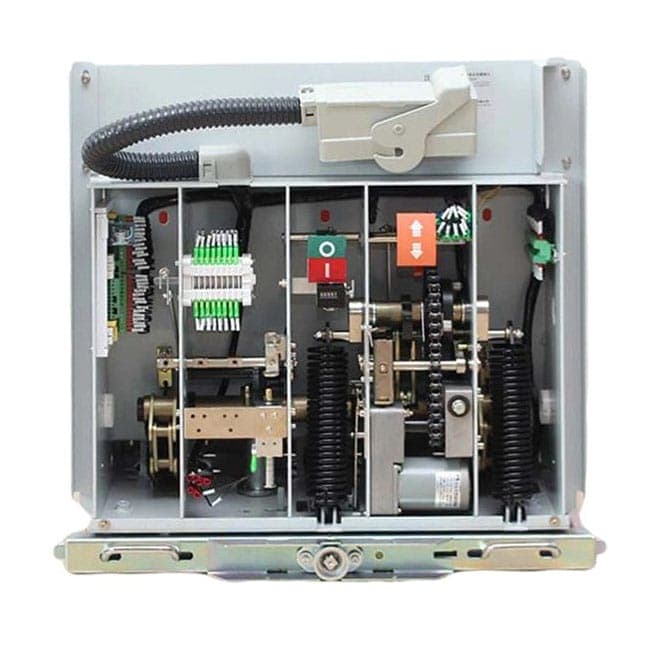
Table of Contents
- 1. The Anatomy of Protection: What Makes a Circuit Breaker a Guardian?
- 2. The Physics of Arrest: How Does Fault Interruption Eliminate the Arc Flash Threat?
- 3. The Hierarchy of Safety: Why Physical and Electrical Interlocks Are Non-Negotiable
- 4. Configurations for Safety: How Different Switchgear Layouts Impact Personnel Risk
- Frequently Asked Questions (FAQ)
- Conclusion: The Safety Partnership with Lugao Power Co.,Ltd.
The Anatomy of Protection: What Makes a Circuit Breaker a Guardian?
To understand how a High Voltage Circuit Breaker protects lives, we must dissect its anatomy. It is not a single device, but a system of systems, each layer adding a critical barrier against electrical catastrophe. Think of it as a medieval knight's armor: the outer shell deflects the first blow, the chainmail absorbs the shock, and the padded underlayer ensures the wearer survives the impact. In the context of high voltage, these layers are physical isolation, active arc extinguishment, and failsafe control logic. Our factory designs each High Voltage Circuit Breaker with these concentric rings of defense, ensuring that even if one system falters, the others will hold the line.
Let’s walk through the layers of a typical live-tank SF6 High Voltage Circuit Breaker from our facility:
Layer 1: The Envelope & The Insulating Medium
The first layer of safety is the physical enclosure. All live components—the contacts, the arc chutes, and the connection points—are sealed within a grounded metal envelope. In modern SF6 breakers, this envelope is filled with sulfur hexafluoride (SF6) gas, a medium with dielectric strength far superior to air. This means that a person standing adjacent to the breaker is already insulated from the lethal potential inside by the strong dielectric properties of the gas and the robust tank wall. If a fault occurs, the tank is designed to withstand the internal pressure without rupturing, preventing hot gas and debris from being expelled outward. This containment is the first, often overlooked, layer of personnel safety.
Layer 2: The Interrupter – The "Heart of the Guardian"
When a fault occurs, the breaker's interrupter unit springs into action. Within milliseconds, the moving contact separates from the fixed contact. This action alone, however, would create a dangerous arc. The interrupter unit contains a puffer cylinder that mechanically compresses the SF6 gas and directs a high-velocity jet through the arc zone. This jet cools the arc and sweeps away ionized particles, forcing the current to zero and stopping the flow of electricity. The sheer speed of this operation—often less than 50 milliseconds—limits the duration of the fault and minimizes the thermal energy released, which is the primary source of arc flash hazards. For a station worker, this means that a potential catastrophic fault is extinguished before its energy can reach a level that would endanger lives. Our factory's High Voltage Circuit Breaker series are tested to handle short-circuit currents up to 63 kA, ensuring that even the most severe grid events are safely managed.
Layer 3: The Control & Interlocking System
Beyond the physical extinguishing of the arc, the High Voltage Circuit Breaker must ensure that it cannot be operated in a way that endangers workers. This is achieved through a sophisticated mechanical and electrical interlock system. For instance, the closing mechanism is often locked out if the breaker is in a "test" position or if the earthing switch is not engaged. In our designs, we incorporate "key interlocking" where a key must be turned to release a mechanical block, ensuring that the operator physically confirms the safe state before changing the breaker's status. This layer of control logic is the human-machine interface that prevents accidental energization, a leading cause of workplace injuries in substations.
The Physics of Arrest: How Does Fault Interruption Eliminate the Arc Flash Threat?
The term "arc flash" is synonymous with the gravest of dangers in a substation. It is a type of electrical explosion that results from a low-impedance connection to ground or another phase. The resulting light, sound, and thermal energy can be instantly lethal. The primary mechanism by which a High Voltage Circuit Breaker protects personnel is by arresting this arc at the very point of its inception. To do this, the breaker must overcome the fundamental physics of electricity—specifically, the fact that an arc creates a highly conductive path of ionized gas that continues to carry current.
Here is the step-by-step physical sequence that occurs inside our High Voltage Circuit Breaker when a fault is detected:
- Detection and Signal: Protection relays (not part of the breaker but connected to it) sense the excessive current and send a trip signal to the breaker's operating mechanism.
- Contact Separation (T0): The operating mechanism (spring, hydraulic, or pneumatic) forces the moving contact away from the fixed contact. As the contacts part, an electric arc is struck between them. This arc is essentially a short circuit through the insulating gas, but with temperatures exceeding 20,000K.
- The Puffer Action (T0 to T2): Simultaneously with contact movement, a piston within the interrupter compresses the SF6 gas, raising its pressure from a nominal 5 bar to over 15 bar. This compressed gas is then forced through a nozzle to the arc zone at a supersonic speed.
- Arc Extinction at Current Zero (T3): The high-velocity gas flow removes the heat from the arc and blows away the ionized particles. The natural alternating current (AC) waveform passes through a zero point. At this exact moment, the combination of reduced ionization and the cooling gas stops the arc from re-igniting. The current is permanently interrupted.
- Dielectric Recovery: Post-interruption, the contact gap is filled with fresh, un-ionized SF6 gas, which quickly recovers its dielectric strength, ensuring the breaker can withstand the system voltage without re-striking.
This entire sequence happens in a time frame of 30 to 60 milliseconds. For the technician performing maintenance, the threat of an arc flash is not just minimized; it is effectively eliminated because the fault energy is dissipated inside the sealed interrupter chamber, not in the open air of the switchyard. Our factory has conducted extensive high-speed camera analysis of this process, allowing us to refine the nozzle geometry and puffer timing in our High Voltage Circuit Breaker to achieve the fastest possible clearing times. This speed is safety. It is the difference between a brief fault and a catastrophe.
Furthermore, the design of the operating mechanism itself contributes to safety. Our factory uses a "trip-free" mechanism, meaning that even if the close command is held during a fault, the breaker will override and open. This failsafe ensures that personnel are never exposed to an attempted re-energization into a fault, which is a common hazard in older systems.
The Hierarchy of Safety: Why Physical and Electrical Interlocks Are Non-Negotiable
In the pursuit of safety, the High Voltage Circuit Breaker is governed by a strict hierarchy: prevention first, then protection, and finally mitigation. The physical and electrical interlocks embedded within the breaker's cabinet and control system are the embodiment of this hierarchy. These interlocks are not optional add-ons; they are fundamental to the safe operation of the equipment. They are designed to enforce a specific sequence of operations, ensuring that no single human error can lead to a live work environment. This philosophy is deeply ingrained in our factory's design process, as we believe that the safest system is one that inherently prevents mistakes.
Let us examine the key interlocking mechanisms that safeguard personnel during common substation tasks:
1. Position-Based Interlocks (Mechanical): These are physical blocks that prevent operation based on the position of the breaker truck (in draw-out switchgear) or the earthing switch. For example, the breaker cannot be closed if the earthing switch is in the "closed" position. This is achieved via a cam and locking pin arrangement. In our High Voltage Circuit Breaker cabinets, we use a positive mechanical linkage, not just an electrical signal, to ensure that this interlock is absolute. This prevents the extremely dangerous scenario of closing a breaker onto a grounded line.
2. Key Interlocking (Programmatic): This system uses a series of locks and keys. One key can only be removed when the breaker is in a specific state (e.g., open and isolated). That key is then used to unlock the earthing switch, and so on. This forces a strict procedure. For instance, to perform maintenance on a feeder cable, the operator must: (a) Open the breaker, (b) Isolate the breaker (rack it out), (c) Close the earthing switch. Each step requires a unique key, and the sequence is pre-defined. Our factory provides custom key interlocking schemes tailored to the specific busbar and feeder configuration of each substation, ensuring that the "safe state" is always verified before access is granted.
3. Electrical Interlocks (Logic-Based): These are supervisory controls that prevent the breaker from closing or opening under invalid conditions. For example, a "block close" signal from a protection relay will prevent the closing coil from being energized. More importantly, we incorporate "anti-pumping" logic, which prevents the breaker from repeatedly closing and opening if the close command is maintained after a fault. This prevents the breaker from being damaged and potentially failing catastrophically during a fault clearance, which would endanger anyone nearby. In our modern High Voltage Circuit Breaker models, these logic functions are integrated into a smart control module with self-diagnostic capabilities, reducing the risk of wiring errors.
Why is this non-negotiable? Consider a situation where an operator needs to test a circuit. Without these interlocks, a simple miscommunication could lead to the breaker being closed while an earthing clamp is still attached to the line. The resulting explosion would be fatal. Our factory at Lugao Power Co.,Ltd. treats interlocks as a primary, not a secondary, safety feature. We test these interlocks extensively under simulated failure conditions, ensuring that they fail in a safe state.
Configurations for Safety: How Different Switchgear Layouts Impact Personnel Risk
The way a High Voltage Circuit Breaker is integrated into the substation switchgear significantly affects the safety of operating personnel. Two main configurations dominate: Air-Insulated Switchgear (AIS) and Gas-Insulated Switchgear (GIS). Each presents a different set of risks and safety advantages. Choosing the right layout is a strategic safety decision. Our factory provides detailed risk assessments for each configuration, helping utilities balance space constraints with personnel safety.
Let’s compare these configurations based on key safety parameters:
| Safety Aspect | Air-Insulated Switchgear (AIS) | Gas-Insulated Switchgear (GIS) | Impact on Personnel Safety |
| Arc Flash Containment | External arc flash; needs large safety clearances. | Internal fault contained within GIS enclosure; inherently safer. | GIS drastically reduces arc flash exposure risk. |
| Live Part Accessibility | Conductors are visible and exposed when not isolated. | All live parts are enclosed in grounded metal. | GIS reduces the chance of accidental contact. |
| Working Space Requirements | Requires large clearances for safe work. | Compact footprint reduces substation size. | GIS frees up space and reduces risk of falls or close proximity. |
| Maintenance Risk | Open air, direct exposure to weather and debris. | Sealed environment, minimal maintenance intervals. | GIS reduces the frequency of dangerous maintenance tasks. |
As the table illustrates, GIS technology offers a significant leap forward in personnel safety. By encapsulating the High Voltage Circuit Breaker and all other components in a metal enclosure filled with SF6, GIS virtually eliminates the risk of an external arc flash. The system is pressurized, so even if a fault occurs, the blast is contained, and the pressure is dissipated through pressure relief ducts designed to direct any discharge away from personnel. In contrast, AIS breakers are mounted on open structures, and while they include grounding and interlocks, a fault can still produce a violent and dangerous arc flash that propagates into the switchyard.
However, GIS is not without its own safety considerations. The SF6 gas is dense and can displace oxygen in closed spaces, and during a severe internal fault, toxic decomposition products can form. Our High Voltage Circuit Breaker GIS units incorporate gas monitoring systems (density and moisture) and are equipped with pressure relief vents and exhaust filters to handle these byproducts safely. We also design our GIS compartments to ensure that routine access for gas sampling or component inspection can be done safely with proper personal protective equipment (PPE). Our factory offers a comprehensive training package on the specific safety protocols for GIS operation, emphasizing that while the technology provides superior protection, it requires a disciplined approach to maintenance.
Ultimately, whether a utility chooses AIS or GIS, the High Voltage Circuit Breaker is the central safety component. Our factory ensures that regardless of the switchgear layout, the breaker we supply is equipped with the highest level of interlocks, arc-quenching capability, and diagnostic intelligence to protect the people who maintain the power grid.
Frequently Asked Questions (FAQ)
Question 1: What is the primary difference between an SF6 circuit breaker and a vacuum circuit breaker in terms of safety?
Answer: Both SF6 and vacuum breakers are used for safety, but they differ in their medium. SF6 breakers, like those from Lugao Power Co.,Ltd., use SF6 gas which offers excellent dielectric properties and is ideal for high-voltage applications (up to 800kV). They contain the arc within a sealed chamber, but the gas itself requires careful handling as it is a greenhouse gas. Vacuum breakers use a vacuum as the dielectric, which is extremely safe and requires no gas handling, but they are typically limited to medium-voltage (up to 52kV) due to the physical constraints of the vacuum interrupter. For high-voltage substation personnel safety, SF6 offers superior interruption capability, but robust gas handling and monitoring systems are essential to mitigate its environmental and asphyxiation risks.
Question 2: How does a "Trip-Free" mechanism in a High Voltage Circuit Breaker enhance safety?
Answer: A "trip-free" mechanism is a critical safety feature. It ensures that if an operator holds the breaker's close button while a trip command is active (due to a fault), the breaker will override the close command and stay open. This prevents the breaker from attempting to close and re-energize a faulty circuit while personnel are in the vicinity. It effectively puts the breaker in a state that cannot be overridden by manual intervention, preventing a potentially catastrophic re-fault. This design is central to the fail-safe philosophy at our factory.
Question 3: Can a High Voltage Circuit Breaker be opened remotely to ensure personnel safety during a disaster?
Answer: Yes. Modern High Voltage Circuit Breakers are equipped with remote tripping capabilities via SCADA or substation control systems. This allows operators to open the breaker from a safe distance (a control room) in the event of an emergency, such as a fire, earthquake, or a looming arc flash threat, before anyone approaches the equipment. This remote operation is a key benefit of modern digital substations, significantly reducing the risk to human life during extreme events. Our factory integrates robust communication interfaces (IEC 61850) to ensure reliable remote operation.
Question 4: What safety features prevent a worker from accidentally closing a breaker while another worker is inside the cubicle?
Answer: This is prevented primarily through a combination of mechanical interlocks and padlocking. In most switchgear designs, the breaker cannot be racked into the "closed" position if the circuit is not complete. Additionally, the mechanism has a "grounded" position that mechanically prevents the closing of the earthing switch if the breaker is closed. Finally, the use of lockout/tagout (LOTO) procedures with physical padlocks on the breaker's control circuit ensures that the breaker cannot be remotely or locally closed while maintenance is in progress. These multi-layered measures create a failsafe system.
Question 5: Does Lugao Power Co.,Ltd. provide training on the safe operation of its High Voltage Circuit Breakers?
Answer: Yes, we offer comprehensive training programs as part of our after-sales service. The training covers not only the basic operation but also detailed modules on interlock systems, arc flash safety, emergency procedures, and proper use of personal protective equipment (PPE). We provide on-site training and virtual simulations to ensure that operators and technicians understand the safety mechanisms embedded in our equipment. This commitment to education is part of our core philosophy of being a partner in safety, not just a supplier of equipment.
Conclusion: The Safety Partnership with Lugao Power Co.,Ltd.
The High Voltage Circuit Breaker is the unsung hero of substation safety. It is the device that stands, unseen, to contain the fury of a fault, the one that enforces a strict sequence of operations, and the one that physically separates the men and women from the millions of volts that power our world. At Lugao Power Co.,Ltd., our factory does not simply manufacture High Voltage Circuit Breaker units; we engineer safety systems. We understand that behind every specification and every test report is the well-being of a human being. We are committed to pushing the boundaries of interruption technology, interlock logic, and diagnostic intelligence to ensure that our products not only protect the grid but also the people who serve it. Safety is not a checklist; it is our culture.
Ready to enhance the safety infrastructure of your substation? Contact Lugao Power Co.,Ltd. today for a comprehensive safety audit of your current breaker fleet. Our team of experts will provide a detailed analysis of your existing equipment, recommend upgrades, and develop a customized training plan for your staff. We offer free initial consultations and a comprehensive technical package that includes detailed drawings and safety manuals. Request your free safety consultation now from Lugao Power Co.,Ltd. and ensure your substation is equipped with the best in High Voltage Circuit Breaker safety technology.