
- English
- Español
- Português
- русский
- Français
- 日本語
- Deutsch
- tiếng Việt
- Italiano
- Nederlands
- ภาษาไทย
- Polski
- 한국어
- Svenska
- magyar
- Malay
- বাংলা ভাষার
- Dansk
- Suomi
- हिन्दी
- Pilipino
- Türkçe
- Gaeilge
- العربية
- Indonesia
- Norsk
- تمل
- český
- ελληνικά
- український
- Javanese
- فارسی
- தமிழ்
- తెలుగు
- नेपाली
- Burmese
- български
- ລາວ
- Latine
- Қазақша
- Euskal
- Azərbaycan
- Slovenský jazyk
- Македонски
- Lietuvos
- Eesti Keel
- Română
- Slovenski
- मराठी
- Srpski језик

How Do High Voltage Circuit Breakers Balance Reliability, Efficiency, and Safety in Power Systems?
Within the vast, humming network of a modern power grid, a silent battle rages. On one side, the demand for reliable, uninterrupted power flows through hundreds of kilometers of transmission lines and transformers. On the other, the ever-present threat of faults—lightning strikes, fallen trees, equipment failures—that can send destructive currents surging through the system. The guardians of this delicate balance are the High Voltage Circuit Breaker. These are not merely switches; they are sophisticated electromechanical systems that must perform a paradoxically simple yet immensely complex task: carry the normal load current without loss for years, yet within milliseconds, interrupt the enormous current of a fault. This is the core of the engineering challenge: how do High Voltage Circuit Breaker balance the three critical pillars of power system operation—reliability, efficiency, and safety—often pulling in opposing directions?
The answer lies in a combination of advanced physical principles, careful engineering design, and intelligent system integration. Reliability is achieved through the use of robust materials, multiple safety margins, and predictive diagnostics. Efficiency is optimized through low-resistance contacts, minimal operating energy, and long maintenance intervals. Safety is ensured through the use of inert arc-quenching media, robust interlocks, and remote operation capabilities. The High Voltage Circuit Breaker must serve as a perfect conductor under normal conditions and a perfect insulator under fault conditions—a duality that is achieved by the precise control of an arc. The balance is not a static point but a dynamic, evolving target, as technology advances and grid demands change. This article will dissect the core components of this balance, exploring the physical, mechanical, and control strategies that allow a modern High Voltage Circuit Breaker to excel across all three pillars. We will also share technical specifications and operational insights that inform the design and selection of these critical components.
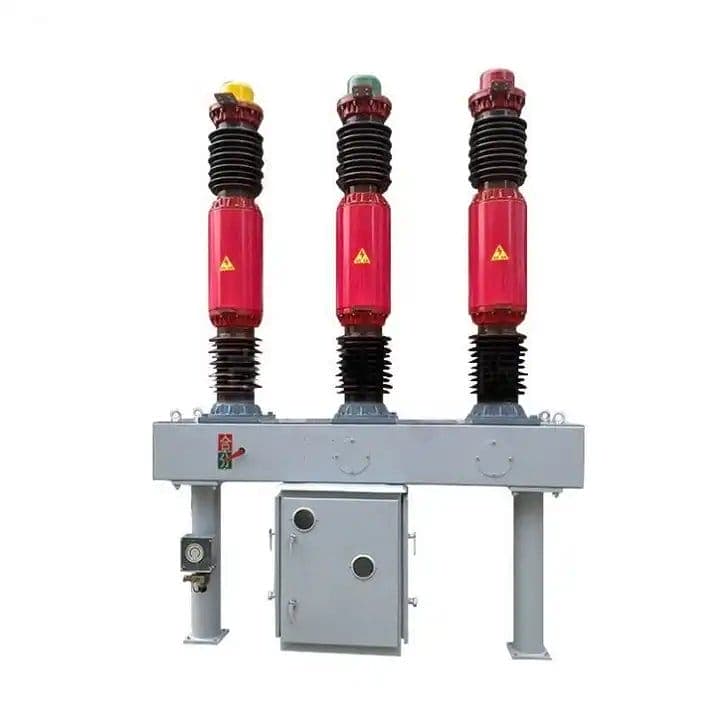
Table of Contents
- 1. The Physics of Interruption: How Does the Arc Extinguish?
- 2. The Reliability Pillar: What Makes a Circuit Breaker Dependable for Decades?
- 3. The Efficiency Pillar: How Can a Circuit Breaker Minimize Losses?
- 4. The Safety Pillar: How Is Personnel and System Protection Achieved?
- 5. The Balancing Act: How Do These Three Pillars Conflict and Cooperate?
- Frequently Asked Questions (FAQ)
- Conclusion: The Future of Circuit Breaker Design
1. The Physics of Interruption: How Does the Arc Extinguish?
To understand how a High Voltage Circuit Breaker balances its core objectives, we must first understand the fundamental physics of arc extinction. When the contacts of a circuit breaker part under load, an electric arc forms across the gap. This arc is a high-temperature plasma, conducting current and, if left unchecked, will continue to carry the fault current indefinitely. The circuit breaker's job is to force that arc to extinguish at the next natural current zero. The challenge is that the arc creates an ionized path that can rapidly reignite as the voltage rises after the current zero. The key to successful interruption is to deionize the gap and restore its dielectric strength faster than the transient recovery voltage (TRV) builds up.
The primary mechanism for arc extinction in modern High Voltage Circuit Breaker is the use of an arc-quenching medium. This can be sulfur hexafluoride (SF6) gas, vacuum, or oil, each with its own set of physical properties. SF6 is electronegative, meaning its molecules readily capture free electrons, preventing the formation of an arc channel. This makes it exceptionally effective at both high voltages and high currents. The circuit breaker design uses this principle: a moving contact, connected to a puffer cylinder, compresses the SF6 gas during the opening stroke. This pressurized gas is then directed through a nozzle into the arc region, sweeping away the ionized particles and cooling the plasma. This is the physical principle that allows a High Voltage Circuit Breaker to interrupt enormous fault currents in just 30-50 milliseconds.
The relationship between these design features and the overall balance of the circuit breaker is intimate. The choice of interrupting medium dictates the environmental impact, maintenance requirements, and physical size of the equipment. SF6, while extremely effective, has a high Global Warming Potential (GWP), leading to a growing push for alternatives. Vacuum breakers, while offering excellent performance at medium voltages, require multiple interrupter units in series for high-voltage applications. The selection of the interrupting medium is therefore a key element in the balancing act, as it directly impacts the operational reliability, cost, and environmental sustainability of the circuit breaker.
Our factory at Lugao has developed a range of High Voltage Circuit Breaker that optimize the arc extinction process for various application needs. For transmission-level applications (≥72.5 kV), we offer SF6 circuit breakers with advanced puffer and self-blast technology, combining high short-circuit breaking capacity with low operating energy. The self-blast mechanism uses the arc energy itself to assist in the compression of the gas, reducing the mechanical energy required from the operating mechanism, enhancing overall efficiency. The following table illustrates the typical interruption performance of our High Voltage Circuit Breaker models.
| Model | Rated Voltage (kV) | Rated Short-Circuit Breaking Current (kA) | Interrupting Time (ms) | Mechanical Operating Life (Operations) |
| LGB-72.5 | 72.5 | 31.5 | 28 | 12,000 |
| LGB-145 | 145 | 40 | 32 | 10,000 |
| LGB-245 | 245 | 50 | 35 | 8,000 |
| LGB-550 | 550 | 63 | 38 | 6,000 |
2. The Reliability Pillar: What Makes a Circuit Breaker Dependable for Decades?
In the electrical power industry, reliability is often the highest priority. A High Voltage Circuit Breaker is a strategic asset, and its failure can have catastrophic consequences. Reliability is not achieved by a single feature; it is the result of a deliberate design philosophy that encompasses material selection, mechanical design, environmental resilience, and predictive diagnostics. The modern High Voltage Circuit Breaker must be capable of lying dormant for months, even years, and then, when required, springing into action with absolute certainty. Achieving this level of dependability is a triumph of engineering.
The foundation of reliability lies in the material selection. For the current-carrying path, the contact system is particularly critical. The contact surfaces are typically silver-plated or silver-tungsten alloy, chosen for their high conductivity and resistance to contact welding. The contact pressure is carefully controlled to maintain low resistance without causing excessive wear during the long closed position. The lubricants used are specifically formulated for the long life of the mechanical mechanism. Greases are chosen for their ability to maintain their properties over a wide temperature range, providing consistent operation over the circuit breaker's lifetime. These are not off-the-shelf components; they are engineered specifically for the demanding environment of a High Voltage Circuit Breaker.
The mechanical design of the operating mechanism is equally crucial. The mechanism must be capable of moving the mass of the moving contact assembly with sufficient speed to achieve the required interruption time, repeatedly and reliably over thousands of operations. This is achieved through a combination of spring, hydraulic, or pneumatic energy storage systems. Spring mechanisms, while simpler in design, must have springs that can maintain their force over decades. This is why springs are often pre-loaded at the factory, and the mechanism is designed to minimize the number of moving parts, reducing the potential for mechanical wear and failure.
Environmental resilience is another key element of reliability. High Voltage Circuit Breaker are often installed outdoors, where they are exposed to rain, snow, ice, salt spray, and extreme temperatures. The SF6 gas inside the interrupter provides a clean, controlled environment for the contacts, but the external structure must be protected. This is achieved through careful design of the housing, seals, and the use of high-quality corrosion-resistant materials. The insulator used is critical; ceramic or polymer insulators must withstand the voltage stress and environmental pollution. Our factory at Lugao Power Co.,Ltd. uses only high-grade materials, and our circuit breakers are tested to withstand extreme conditions, ensuring long-term reliability.
Modern circuit breakers are increasingly equipped with condition monitoring systems. These systems monitor the operating mechanism, the gas pressure, the contact travel, and the electrical circuit. This information is used to predict failures, allowing maintenance to be scheduled before a problem occurs. The integration of sensors, such as fiber-optic current and voltage sensors, provides real-time data on the health of the circuit breaker, moving maintenance from a time-based to a condition-based approach. This is the future of reliability: not just ensuring the High Voltage Circuit Breaker works when required, but knowing it is going to work, with an ever-increasing degree of certainty. By combining these approaches, the modern High Voltage Circuit Breaker achieves levels of reliability that were unimaginable a generation ago.
3. The Efficiency Pillar: How Can a Circuit Breaker Minimize Losses?
Efficiency, in the context of a High Voltage Circuit Breaker, is not about converting energy from one form to another. It is about minimizing losses in the normal current-carrying state and reducing the energy required for operation. The circuit breaker sits in the path of the power flow 99.9% of the time, and any resistance in this path contributes to heat loss (I²R losses) and a reduction in system efficiency. Therefore, the design of the contacts and the current path is crucial. The contact pressure must be sufficient to minimize contact resistance, yet low enough to avoid excessive wear. The material choice is a key variable; silver-plated contacts, for example, provide an exceptionally low resistance path. Moreover, the contact design is optimized to avoid hot spots or localized heating.
The operating energy is another efficiency factor. The circuit breaker must be capable of rapidly opening and closing its contacts. The energy required for this operation is drawn from a stored energy source, such as a charged spring or hydraulic accumulator. Minimizing the required energy reduces the size and cost of the mechanism, reduces the stress on the components, and contributes to overall system efficiency. The self-blast design, where the arc energy assists in the compression of the quenching gas, is a prime example of this principle. By using the arc's own energy to assist in the interruption process, the mechanical energy required from the operating mechanism is reduced, improving the overall efficiency of the device.
Another important aspect of efficiency is the leakage rate of the SF6 gas. SF6 is an expensive insulating gas and is also a potent greenhouse gas. Any leakage represents both a financial cost and an environmental impact. Modern High Voltage Circuit Breaker are designed with extremely low leakage rates. High-quality seals and precise manufacturing standards ensure that the gas is contained within the interrupter for its entire service life. The sealing technology, combined with advanced monitoring of gas density, ensures that the circuit breaker operates at its optimum performance without environmental leakage.
The efficiency of a High Voltage Circuit Breaker extends beyond its own operation to the wider power system. By providing fast and reliable fault interruption, the circuit breaker minimizes the risk of equipment damage and power outages, which can have huge economic costs. The circuit breaker is a key component in a modern, efficient power system. Our High Voltage Circuit Breaker are designed not only for excellence in their own function, but also to contribute to the overall efficiency of the grid. The table below outlines the key efficiency-enhancing features of our circuit breaker models.
| Feature | Description | Efficiency Benefit |
| Low-Resistance Contacts | Silver-tungsten alloy contacts with high pressure | Reduces I²R losses in the closed position; lowers operating temperature |
| Self-Blast Interruption | Uses arc energy to assist in gas compression | Reduces mechanical energy required for operation; smaller, more efficient mechanisms |
| Low SF6 Leakage Rate | Advanced sealing and density monitoring | Reduces gas refilling costs and environmental impact |
| Optimized Operating Mechanism | Spring or hydraulic mechanisms with low friction | Lower energy consumption during charging and operation |
4. The Safety Pillar: How Is Personnel and System Protection Achieved?
Safety, in the context of High Voltage Circuit Breaker, is a multi-faceted concept. It encompasses the protection of the power system itself, safeguarding the physical infrastructure from thermal and mechanical damage during fault conditions. It also involves the protection of operating personnel, shielding them from the risks of high-voltage and high-energy electrical equipment. A failure in safety can be catastrophic, making it a primary design driver. Safety is not an add-on feature; it is a core principle integrated into the operation of the circuit breaker.
Safety begins with the interrupter itself. The choice of an insulating medium, such as SF6, inherently provides safety advantages. The gas is inert and non-flammable, removing the fire and explosion risks associated with oil circuit breakers. The hermetically sealed interrupter also protects the internal contacts from the environment, ensuring that the circuit breaker's protective function is not compromised by external contamination. The enclosure is designed to withstand the internal pressure from an arc, containing any potential failure and protecting personnel from the effects of a fault.
In addition to the inherent safety of the interrupter, modern High Voltage Circuit Breaker incorporate a wide array of safety interlocks and protection features. The operating mechanism is designed with mechanical interlocks that prevent incorrect operation. For example, the closing operation is mechanically locked out if the opening command is given, preventing the circuit breaker from being closed onto a fault. The electrical control circuit is similarly protected with lock-outs to prevent multiple operations that could damage the mechanism. Grounding switches are often integrated, providing a visible and verifiable path to ground for maintenance purposes. These interlocks are essential for ensuring the safety of personnel and the reliability of the power system.
Another critical aspect of safety is fault current limitation. The High Voltage Circuit Breaker is the primary device for interrupting fault currents, and its ability to do so quickly minimizes the duration of the fault. This reduces the thermal and mechanical stress on the system components, protecting transformers, cables, and generators from damage. By clearing the fault rapidly, the circuit breaker also reduces the risk of secondary failures, such as an arc flash or an explosion, which could endanger personnel. In addition to the circuit breaker itself, proper safety procedures and training are essential for protecting personnel. The circuit breaker is designed with remote operation capability, allowing the operator to be safely located away from the equipment during the switching operation.
The balance between safety and the other pillars is crucial. A circuit breaker that is designed with extreme safety margins may be larger, heavier, and more expensive. However, the safety provided by the equipment is a non-negotiable factor. The table below outlines the key safety features integrated into our High Voltage Circuit Breaker.
| Safety Feature | Description | Safety Benefit |
| Inert Interrupting Medium (SF6) | Non-flammable, non-explosive gas | Eliminates fire and explosion risk |
| Mechanical Interlocks | Prevents incorrect operation | Prevents closing onto a fault or opening during maintenance |
| Grounding Switches | Provides a visible ground path for maintenance | Ensures equipment is de-energized before personnel work on it |
| Remote Operation Capability | Allows operation from a safe distance | Protects personnel from arc flash hazards during switching |
| Fault Current Limiting | Rapid interruption minimizes fault duration | Reduces thermal and mechanical stress on system |
5. The Balancing Act: How Do These Three Pillars Conflict and Cooperate?
So far, we have examined reliability, efficiency, and safety as three distinct pillars. However, the true challenge of High Voltage Circuit Breaker design lies in the interplay between them. These three objectives often conflict. For example, a design that maximizes reliability might involve additional redundancy, leading to increased weight and cost, and potentially reducing efficiency. A design that maximizes efficiency might use lighter materials, but these materials might not provide the same long-term reliability as heavier, more robust alternatives. The art of the circuit breaker engineer is to find the optimal balance point.
Consider the case of contact design. To achieve high reliability, the contacts must be designed to withstand the electrical and thermal stresses of the fault current. This may require a larger contact area or a more robust material, which can increase the contact resistance and reduce efficiency. Conversely, to achieve high efficiency, the contact resistance must be minimized, but this can lead to a design that is more susceptible to contact welding or erosion. The engineer must navigate these conflicting requirements, selecting materials and designs that offer the best compromise. Similarly, the operating mechanism must be designed to be highly reliable, but its energy consumption is a factor in the overall efficiency of the circuit breaker.
These three pillars also cooperate. A circuit breaker that is highly reliable is also safer. If a circuit breaker is unreliable, it can fail to interrupt a fault, leading to a catastrophic failure that could endanger both the system and personnel. Similarly, a circuit breaker that is efficient is also more reliable, as it operates at lower temperatures and puts less stress on its components. The use of self-blast technology is a perfect example of this collaboration: it improves efficiency by reducing operating energy, but it also enhances reliability by reducing the mechanical load on the mechanism. The integration of condition monitoring systems is a powerful tool for improving all three pillars simultaneously. By monitoring the health of the circuit breaker, the system can predict and prevent failures, enhancing reliability. By identifying inefficient operating modes, the system can be optimized, improving efficiency. And by providing early warning of potential problems, the system can be used to enhance safety.
The balance is dynamic. As technology advances, the definition of the optimum balance shifts. The introduction of new materials, new sensors, and new control algorithms is continuously pushing the boundaries of what is possible. The future of High Voltage Circuit Breaker is one of even greater integration, where the circuit breaker becomes a smart, communicating node in a digital grid. It will be a system that is not just reliable, efficient, and safe, but one that actively manages its own health, predicts its own needs, and optimizes its own performance. This is the future that our factory at Lugao is dedicated to creating.
The following table illustrates how design choices in a High Voltage Circuit Breaker can impact the three pillars, demonstrating the inherent trade-offs.
| Design Feature | Impact on Reliability | Impact on Efficiency | Impact on Safety |
| Contact Material | High: Better materials last longer | High: Low resistance reduces losses | Moderate: Prevents arcing/welding |
| Operating Mechanism | High: More robust = more reliable | High: Lower friction = more efficient | Moderate: Fast operation = safer |
| Interrupter Type | High: SF6 has proven reliability | High: Self-blast reduces energy | High: Non-flammable = safer |
| Monitoring System | High: Predicts and prevents failures | Moderate: Optimizes maintenance | High: Early warning of problems |
| Enclosure Design | High: Protects from environment | Moderate: Affects heat dissipation | High: Contains arc/blast |
Frequently Asked Questions (FAQ)
Question 1: What is the typical lifespan of a high voltage circuit breaker, and what factors affect its longevity?
Answer: A high-quality High Voltage Circuit Breaker, such as those manufactured by Lugao Power Co.,Ltd., typically has a design life of 30 to 40 years. The actual lifespan depends on several factors: the number of fault current interruptions (which degrades the arcing contacts), the frequency of mechanical operations (which affects the mechanism), the ambient environment (corrosion, temperature), and the quality of maintenance. A well-maintained SF6 circuit breaker, with a limited number of fault operations, can easily exceed its design life. Our circuit breakers are designed with replaceable arcing contacts to allow for a cost-effective life extension. Regular condition monitoring and maintenance are key to maximizing service life.
Question 2: How does a high voltage circuit breaker handle a direct current (DC) fault, which does not have a natural zero-crossing?
Answer: High Voltage Circuit Breaker are primarily designed for AC systems, where the current naturally crosses zero twice per cycle. DC systems do not have this natural zero, making interruption much more difficult. For DC faults, the circuit breaker must force a zero current. This is typically achieved in high-voltage DC (HVDC) systems using a dedicated HVDC circuit breaker, which uses a different interruption mechanism, such as a hybrid approach using power electronics to force the current to zero, combined with a mechanical switch to isolate the fault. Our factory manufactures specialized High Voltage Circuit Breaker for HVDC applications, which incorporate these advanced technologies.
Question 3: What is the difference between a dead tank and a live tank circuit breaker configuration?
Answer: In a dead tank circuit breaker, the interrupter is housed in a grounded metal enclosure. This provides a clear safety advantage, as the high voltage is enclosed and the enclosure is at ground potential. In a live tank circuit breaker, the interrupter is located at high voltage, and the tank is not grounded. Dead tank breakers are typically easier to maintain and offer more design flexibility, but they are heavier and more expensive. Live tank breakers are lighter and have lower dielectric losses, making them more efficient for some applications. Both designs are manufactured by our factory at Lugao Power Co.,Ltd., providing our customers with a choice based on their specific requirements.
Question 4: What are the potential environmental concerns with SF6 circuit breakers, and how are they being addressed?
Answer: SF6 has a high Global Warming Potential (GWP), making it a potent greenhouse gas. The industry is actively working to reduce SF6 emissions through improved sealing, tighter gas handling procedures, and the development of alternative gases. Our factory at Lugao Power Co.,Ltd. has implemented a program to minimize SF6 leakage, with rates of less than 0.1% per year. Additionally, we are actively developing High Voltage Circuit Breaker using eco-efficient alternatives, such as AirPlus (a mixture of gases with a significantly reduced GWP), to provide our customers with a more sustainable solution. The transition to these alternatives is a key priority for our research and development efforts.
Question 5: How do I calculate the required short-circuit breaking capacity for a circuit breaker in my substation?
Answer: The required short-circuit breaking capacity is determined by the maximum fault current that can flow at the circuit breaker's installation point. This requires a detailed power system study that considers the source impedance, the transformer impedance, and the network configuration. The study will calculate the symmetrical short-circuit current (kA) and the X/R ratio, which determines the DC component of the fault current. The circuit breaker's rated short-circuit breaking current must be greater than this calculated current, and it must be capable of interrupting the full asymmetrical fault current. Our factory's engineering team can assist with this calculation and provide expert advice on the appropriate High Voltage Circuit Breaker for your application.
Conclusion: The Future of Circuit Breaker Design
The High Voltage Circuit Breaker is a masterpiece of engineering that must constantly balance the competing demands of reliability, efficiency, and safety. This balance is achieved through careful material selection, mechanical design, and system integration. As power systems evolve towards greater complexity, with more renewable energy sources, distributed generation, and DC interconnections, the demands on the circuit breaker will only increase. The future of High Voltage Circuit Breaker lies in the integration of smart technologies, enabling condition-based maintenance, real-time performance optimization, and seamless integration into the digital grid. The humble switch that protects the grid is becoming a sophisticated, intelligent node.
Lugao Power Co.,Ltd. is dedicated to leading this evolution. Our commitment to research and development ensures that our High Voltage Circuit Breaker are at the forefront of technology, offering our customers the best balance of performance, reliability, and sustainability. We invite you to explore our range of products and to contact our engineering team to discuss your specific power system requirements. Whether you are planning a new substation, upgrading an existing one, or seeking to improve the efficiency of your network, our expert team is ready to assist. Contact Lugao Power Co.,Ltd. today to learn more about our comprehensive range of high voltage circuit breaker solutions.