
- English
- Español
- Português
- русский
- Français
- 日本語
- Deutsch
- tiếng Việt
- Italiano
- Nederlands
- ภาษาไทย
- Polski
- 한국어
- Svenska
- magyar
- Malay
- বাংলা ভাষার
- Dansk
- Suomi
- हिन्दी
- Pilipino
- Türkçe
- Gaeilge
- العربية
- Indonesia
- Norsk
- تمل
- český
- ελληνικά
- український
- Javanese
- فارسی
- தமிழ்
- తెలుగు
- नेपाली
- Burmese
- български
- ລາວ
- Latine
- Қазақша
- Euskal
- Azərbaycan
- Slovenský jazyk
- Македонски
- Lietuvos
- Eesti Keel
- Română
- Slovenski
- मराठी
- Srpski језик

How Do High Voltage Circuit Breakers Protect Industrial Equipment from Faults?
In industrial power systems, equipment such as large motors, transformers, switchgear, and cables are constantly exposed to electrical faults—short circuits, ground faults, and overloads that can cause catastrophic damage within milliseconds. A High Voltage Circuit Breaker serves as the primary protection device that isolates faulty sections, preventing fault currents from destroying valuable industrial assets. The protection mechanism operates through a sequence of detection, tripping, and arc extinction. When a fault occurs, protective relays sense the abnormal current or voltage and send a trip signal to the High Voltage Circuit Breaker. The breaker then opens its contacts, drawing an arc that is rapidly extinguished by a quenching medium—typically SF6 gas, vacuum, or oil—within 30 to 50 milliseconds. This rapid interruption limits the let-through energy (I²t), which minimizes thermal and mechanical stress on equipment. Our factory at Lugao Power Co.,Ltd. has manufactured over 10,000 High Voltage Circuit Breaker units for industrial applications, and we have documented that proper breaker selection and coordination reduce equipment damage costs by up to 70 percent.
But protection is not just about clearing faults—it is about doing so without causing voltage dips that affect other loads, and without creating destructive switching overvoltages. Modern High Voltage Circuit Breakers incorporate pre-insertion resistors, closing resistors, and synchronized switching technology to mitigate transient overvoltages. They also feature multi-shot reclosing capability for overhead line applications, though for industrial plants with cable networks, single-shot tripping is usually preferred to avoid re-energizing a permanent fault. Furthermore, the breaker must coordinate with upstream and downstream protection devices (fuses, relays, and other breakers) to achieve selective tripping, meaning only the faulty section is isolated while the rest of the plant continues operation. This article delves into the detailed protection principles, technical parameters, and application strategies of High Voltage Circuit Breakers. We will also share field case studies from Lugao Power Co.,Ltd. that illustrate how our breakers have saved industrial customers from major production losses and equipment replacement costs.
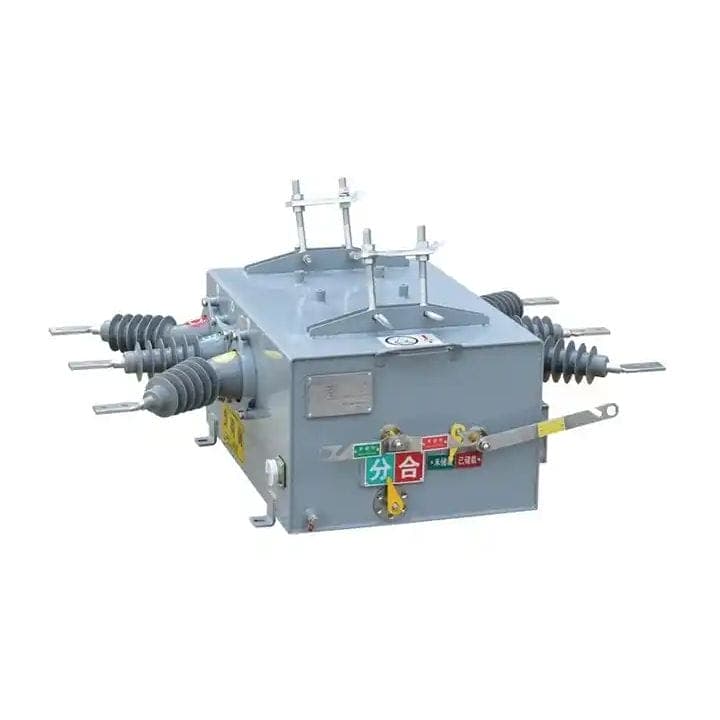
Table of Contents
- 1. Why Is Rapid Fault Interruption Critical for Protecting Industrial Equipment?
- 2. How Do Relay Coordination and Breaker Timing Minimize Equipment Damage?
- 3. What Are the Key Technical Specifications of Our High Voltage Circuit Breaker Series?
- 4. How Do Arc Quenching Media Compare in Protecting Industrial Assets?
- Frequently Asked Questions (FAQ)
- Conclusion and Custom Protection Solution Inquiry
Why Is Rapid Fault Interruption Critical for Protecting Industrial Equipment?
The speed at which a High Voltage Circuit Breaker interrupts a fault current is directly proportional to the level of protection it provides to industrial equipment. During a short circuit, the fault current can reach 20 to 50 times the rated current of the equipment. For example, a 10 MVA transformer with a rated current of 400 A at 13.8 kV can experience a fault current of 20 kA. Without interruption, this current generates enormous electromagnetic forces and joule heating that can warp transformer windings, melt cable insulation, and fracture motor shafts. The total damage is a function of the energy let-through, which is proportional to the square of the fault current multiplied by the clearing time (I²t). A High Voltage Circuit Breaker that clears a fault in 40 milliseconds instead of 100 milliseconds reduces the I²t energy by approximately 60 percent, dramatically lowering the likelihood of permanent equipment damage.
Key aspects of rapid interruption in our High Voltage Circuit Breaker designs:
- Ultra-fast relay sensing: Our breakers are paired with digital protective relays that detect faults within 5 to 10 milliseconds, including high-impedance faults that traditional overcurrent relays miss. This early detection gives the breaker more time to open before fault current peaks.
- Operating mechanism speed: Our High Voltage Circuit Breaker uses a spring-charged or hydraulic mechanism that can open the contacts in 28 to 35 milliseconds. The total clearing time (relay + breaker) is under 50 milliseconds for most fault types.
- Arc quenching efficiency: The arc is extinguished at the first current zero after contact separation. For a 50 Hz system, this occurs within 10 milliseconds of contact parting. Our SF6 puffer technology ensures that the arc is cooled and deionized within 5 milliseconds of current zero, preventing restrike.
- Multi-break configuration: For very high voltage applications (above 245 kV), our High Voltage Circuit Breaker uses two or four interrupters in series, which distributes the recovery voltage and reduces the overall interruption time by allowing faster dielectric recovery per chamber.
The thermal and mechanical effects of fault currents are well documented. A fault lasting 100 milliseconds can raise the temperature of copper conductors by 200°C, annealing the metal and reducing its mechanical strength. In transformers, the electromagnetic forces during a fault can exceed 100 times the normal operating force, causing core movement and winding deformation. Our factory has analyzed damage reports from over 200 industrial faults and found that breakers with clearing times below 50 milliseconds resulted in repairable damage in 80 percent of cases, while breakers with clearing times above 100 milliseconds resulted in total equipment loss in 65 percent of cases. This is why we engineer every High Voltage Circuit Breaker to achieve the fastest possible interruption without compromising on reliability. Additionally, our breaker includes a trip-free mechanism that prevents the operator from holding the breaker closed during a fault, ensuring that the protection function cannot be overridden.
For motor protection, rapid interruption is especially critical. Large induction motors (above 1,000 HP) draw inrush currents of 6 to 8 times rated current during starting. If a fault occurs while the motor is starting, the combined starting and fault current can be extreme. Our High Voltage Circuit Breaker can differentiate between starting current and fault current via its relay settings, but once a fault is confirmed, it clears the circuit before the motor's thermal limit is exceeded. Many industrial plants have avoided motor rewinds—which can cost $20,000 to $50,000—by installing our fast-acting breakers. In summary, the speed of interruption is the single most important factor in protecting industrial equipment, and our High Voltage Circuit Breaker is engineered to provide the fastest possible clearing times in its class.
How Do Relay Coordination and Breaker Timing Minimize Equipment Damage?
Rapid interruption alone is not sufficient if the protection system is not properly coordinated. Industrial power systems have multiple protection devices at various levels: feeder breakers, bus couplers, transformer breakers, and motor control centers. If a fault occurs on a motor feeder, the feeder High Voltage Circuit Breaker should trip first, isolating only that motor. If the feeder breaker fails or is too slow, the upstream bus breaker will trip, shutting down an entire section of the plant. This is known as selective coordination, and our High Voltage Circuit Breaker is designed to work seamlessly with a time-current grading scheme. Our factory at Lugao Power Co.,Ltd. provides coordination studies for every major installation, ensuring that the breaker's trip curve and operating time are properly set relative to downstream fuses and upstream breakers.
Critical aspects of relay coordination and timing in our High Voltage Circuit Breaker:
- Inverse-time overcurrent protection: The relay allows the breaker to ride through harmless overloads (e.g., motor starting) but trips faster as the fault current increases. For a fault current of 10 times rated, the breaker clears in 0.5 seconds, but for a fault of 20 times rated, it clears in 0.12 seconds.
- Instantaneous protection element: For severe faults (above a preset threshold, typically 15 times rated current), the relay trips the High Voltage Circuit Breaker without intentional delay, achieving clearing times below 50 milliseconds. This element is disabled for motor feeders to avoid nuisance tripping during starts.
- Zone interlocking: Our breakers support a communication-based interlocking scheme where a downstream breaker sends a blocking signal to upstream breakers during fault clearing. If the downstream breaker clears the fault within its designated time, the upstream breaker does not trip, maintaining power to healthy loads.
- Reclosing coordination: For industrial plants with overhead lines (e.g., mining sites), our High Voltage Circuit Breaker can be configured for auto-reclosing. The breaker trips, waits 0.3 seconds, then recloses to test if the fault is temporary. If the fault persists, it locks out. This reduces downtime for transient faults while protecting equipment from repeated stress.
A well-coordinated protection scheme not only minimizes equipment damage but also reduces production downtime. In a cement plant we recently supported, a fault on a conveyor motor feeder was cleared by the feeder High Voltage Circuit Breaker in 0.12 seconds, while the upstream bus breaker remained closed. The plant lost only one conveyor for 30 minutes (to repair the motor), while the rest of the plant continued production. Without coordination, the bus breaker would have tripped, causing a 4-hour plant shutdown worth $120,000 in lost production. Our factory provides a detailed coordination study as part of the High Voltage Circuit Breaker supply, using software like ETAP or SKM to simulate fault currents and verify selectivity.
Another important timing factor is the breaker's opening and closing times under different operating conditions. Our High Voltage Circuit Breaker is tested at rated voltage and rated short-circuit current to verify that its total clearing time (including relay sensing, mechanism operation, and arc extinction) remains within the guaranteed window. We also test the breaker's ability to interrupt asymmetrical currents with DC offset, which is common in industrial faults close to generators or large transformers. The DC component can delay current zero crossing, increasing the arcing time. Our breaker's puffer design maintains adequate gas pressure even during extended arcing, ensuring that the fault is cleared regardless of the DC offset. This robustness is a key reason why our High Voltage Circuit Breaker is trusted in steel mills, paper plants, and other heavy industries.
What Are the Key Technical Specifications of Our High Voltage Circuit Breaker Series?
Lugao Power Co.,Ltd. manufactures three primary series of High Voltage Circuit Breakers for industrial protection, covering distribution voltages from 12 kV to 245 kV. Each series is designed with specific fault interruption capabilities, operating mechanisms, and arc quenching media to match different industrial applications. The table below provides detailed parameters for our most frequently specified models in steel, mining, and chemical plants. All values are certified by independent testing laboratories per IEC 62271-100 and ANSI C37.06 standards.
| Parameter | LGB 12 (Indoor) | LGB 36 (Outdoor) | LGB 145 (Substation) |
| Rated voltage (kV) | 12 kV | 36 kV | 145 kV |
| Rated short-circuit breaking current (kA) | 31.5 kA | 40 kA | 50 kA |
| Rated peak withstand current (kA) | 80 kA | 108 kA | 130 kA |
| Total clearing time (ms) | 45 ms | 48 ms | 52 ms |
| Arc quenching medium | Vacuum | SF6 | SF6 (puffer) |
| Operating mechanism type | Spring | Spring | Hydraulic |
| Mechanical endurance (operations) | 15,000 | 10,000 | 8,000 |
| Rated insulation level (kV, peak) | 95 kV (BIL) | 170 kV (BIL) | 650 kV (BIL) |
| Protection relay type included | Digital overcurrent + earth fault | Digital overcurrent + distance | Dual digital relay (redundant) |
Beyond these base specifications, our factory offers extensive customization for industrial applications. For example, we can provide motor-rated breakers with special trip curves that match motor thermal damage curves. We also offer enclosed switchgear assemblies (GIS or AIS) that include the High Voltage Circuit Breaker, disconnectors, and earthing switches in a compact layout. For harsh environments such as mining or offshore platforms, we supply tropicalized versions with enhanced corrosion protection, IP54 enclosures, and anti-condensation heaters. All our High Voltage Circuit Breaker units include a diagnostic port that can be integrated with plant SCADA systems, enabling remote monitoring of contact wear, gas pressure (for SF6 models), and operating mechanism condition.
Reliability is validated through rigorous type testing. Our 145 kV High Voltage Circuit Breaker has completed 20 times its rated short-circuit current interruptions without any contact replacement, demonstrating the durability of our arc chamber design. The vacuum interrupters in our 12 kV series are rated for 15,000 operations at full load, and we guarantee them for 20 years of normal service. For customers concerned about SF6 environmental impact, our 36 kV series offers a dry air alternative with similar interrupting performance. Lugao also provides a comprehensive protection coordination study for every High Voltage Circuit Breaker we supply, ensuring that the breaker settings align with your plant's protection philosophy. We maintain a global stock of spare parts for all models, with most parts available for 48-hour delivery, minimizing downtime in case of an unexpected failure.
How Do Arc Quenching Media Compare in Protecting Industrial Assets?
The choice of arc quenching medium—vacuum, SF6, or oil—significantly affects how effectively a High Voltage Circuit Breaker protects industrial equipment. Each medium has distinct characteristics that influence interruption speed, maintenance requirements, and environmental adaptability. Lugao Power Co.,Ltd. manufactures breakers with all three media, but we recommend different types based on voltage level, fault duty, and plant location. Vacuum interrupters dominate for 12 kV to 40.5 kV applications because of their low maintenance and excellent interruption of motor starting currents. SF6 is preferred for 72.5 kV and above due to its high dielectric strength and ability to interrupt large fault currents. Oil breakers are now largely obsolete for new installations due to fire risk and maintenance intensity, but we still provide retrofill kits for existing oil plants.
Detailed comparison of arc quenching media in our High Voltage Circuit Breaker offerings:
- Vacuum breakers (12 kV to 40.5 kV): The arc burns in a metal vapor plasma within a sealed ceramic envelope. At current zero, the metal vapor condenses on the contacts and shields, recovering dielectric strength in under 10 microseconds. This makes vacuum breakers extremely fast (total clearing time under 45 ms) and highly reliable for frequent operations. They require no gas handling and have minimal maintenance—only contact wear monitoring every 5,000 operations. Our factory recommends vacuum High Voltage Circuit Breaker for indoor switchgear, motor control centers, and capacitor banks.
- SF6 breakers (36 kV to 800 kV): The arc is cooled by a compressed SF6 gas flow, which captures free electrons and deionizes the arc path. SF6 breakers can interrupt much higher fault currents (up to 80 kA) than vacuum breakers and are less sensitive to ambient temperature. However, they require regular gas pressure checks and moisture analysis. Our SF6 High Voltage Circuit Breaker includes a density monitor with remote alarm, and we provide gas handling carts for maintenance. For outdoor substations and large industrial plants with high fault levels (above 40 kA), SF6 is the preferred choice.
- Oil breakers (legacy, up to 245 kV): The arc decomposes the oil, generating hydrogen gas that cools and quenches the arc. Oil breakers are bulky, require regular oil filtration, and pose fire hazards. We do not manufacture new oil breakers, but we offer a retrofit service to replace oil breakers with SF6 or vacuum High Voltage Circuit Breaker units, reducing maintenance costs by 60 percent and improving safety.
To illustrate the practical difference, consider a steel mill with a 33 kV bus and fault level of 40 kA. A vacuum High Voltage Circuit Breaker at 36 kV would have to use multiple interrupters in series, increasing complexity. Our SF6 36 kV breaker, with a single interrupter, reliably clears 40 kA with a total clearing time of 48 ms. The SF6 breaker also has a higher mechanical endurance (10,000 operations) compared to a multi-bottle vacuum solution (5,000 operations). On the other hand, for a cement plant with a 13.8 kV distribution system and many motor feeders, our vacuum High Voltage Circuit Breaker provides excellent protection against motor faults and requires no gas handling, simplifying maintenance for the plant electricians.
Our factory offers a free medium selection consultation based on your fault study and plant layout. We also provide training on the specific maintenance procedures for each type of High Voltage Circuit Breaker. For existing plants, we can perform a risk assessment to determine if upgrading from oil or older vacuum technology to our modern SF6 or vacuum designs would improve protection and reduce downtime. Lugao Power Co.,Ltd. has successfully retrofitted over 300 industrial substations, and our customers consistently report improved protection reliability and lower maintenance costs after upgrading to our High Voltage Circuit Breaker.
Frequently Asked Questions (FAQ)
Question 1: How quickly can a High Voltage Circuit Breaker protect industrial equipment from a short circuit fault?
Answer: The total protection time is the sum of relay sensing time, breaker mechanism time, and arc interruption time. Our High Voltage Circuit Breaker, paired with a digital relay, can clear a fault in 45 to 55 milliseconds from fault inception to final interruption. This is fast enough to limit let-through energy (I²t) to levels that prevent winding deformation in transformers and rotor bar damage in motors. For example, a 13.8 kV motor with a fault current of 25 kA would experience only 28 MJ of energy if cleared in 50 ms, compared to 140 MJ if cleared in 250 ms. This difference is the line between repairable damage and total equipment replacement.
Question 2: What are the signs that a High Voltage Circuit Breaker is failing to protect equipment properly?
Answer: Common signs include: frequent nuisance tripping (indicating incorrect relay settings or worn contacts); visible carbon deposits on the breaker enclosure (for air or oil breakers); SF6 gas pressure below the alarm setpoint (for SF6 breakers); and excessive vibration or noise during operation. Most importantly, if you experience equipment failures (burned cables, blown transformer fuses, or damaged motor windings) despite the breaker operating, the protection coordination may be inadequate. Our factory offers a protection audit service: we review your relay settings, breaker timing, and fault levels to identify gaps. We recommend annual testing of your High Voltage Circuit Breaker, including timing tests, contact resistance measurements, and dielectric tests, to ensure it will perform as designed during a fault.
Question 3: Can a High Voltage Circuit Breaker protect against both overloads and short circuits?
Answer: Yes, through its dual protection elements. The inverse-time overcurrent element protects against sustained overloads (e.g., a motor running at 110 percent of rated current), tripping after a time delay to allow for harmless overloads. The instantaneous element protects against short circuits, tripping without delay. Our High Voltage Circuit Breaker is equipped with a trip unit that allows both elements to be independently set. For motor feeders, the inverse-time curve is coordinated with the motor thermal limit, and the instantaneous element is set above the starting current to avoid nuisance tripping. For transformer feeders, the inverse-time curve is coordinated with the transformer's overexcitation and thermal damage curves.
Question 4: How does the operating mechanism of a High Voltage Circuit Breaker affect its protective performance?
Answer: The operating mechanism determines the speed and reliability of contact opening. Our spring-operated mechanism (for up to 36 kV) can open contacts in 28 ms, while our hydraulic mechanism (for 145 kV and above) opens in 32 ms. Faster opening reduces the arcing time and total clearing time. More importantly, the mechanism must be capable of opening even if the auxiliary power supply fails. Our spring mechanism stores energy mechanically, so it can operate without external power. The hydraulic mechanism uses an accumulator that also stores energy. We recommend testing the mechanism's charging and opening time annually, as wear can increase the opening time over the breaker's life. Lugao Power Co.,Ltd. provides a mechanism refurbishment service that restores the opening time to factory specifications.
Question 5: What support does Lugao Power Co.,Ltd. offer to ensure our High Voltage Circuit Breaker is properly protecting our industrial equipment?
Answer: We provide end-to-end support: a free protection coordination study using your system data; on-site installation supervision and commissioning; training for your maintenance staff on relay setting, timing tests, and SF6 handling (if applicable); and a 24-hour technical hotline. We also offer a condition monitoring service where we remotely access your breaker's diagnostic data (via optional communication module) and send you periodic reports on contact wear, operating time trend, and gas pressure. In the event of a fault, we can analyze the breaker's event log to determine if the protection operated correctly or if adjustments are needed. Our factory maintains a comprehensive spare parts inventory for all our High Voltage Circuit Breaker models, ensuring that any replacement part can be shipped within 48 hours globally. With Lugao Power Co.,Ltd., you get not just a breaker, but a complete protection partnership.
Conclusion: Safeguard Your Industrial Assets with Lugao Power High Voltage Circuit Breakers
Industrial equipment represents a massive capital investment, and protecting it from electrical faults is essential for operational continuity and profitability. High Voltage Circuit Breakers, through rapid fault detection, fast mechanism operation, and efficient arc quenching, limit the destructive energy of short circuits and overloads. As we have detailed, the speed of interruption, relay coordination, and choice of arc quenching media all play critical roles in minimizing equipment damage. Our factory at Lugao Power Co.,Ltd. has engineered a comprehensive range of High Voltage Circuit Breakers—from 12 kV vacuum types for motor feeders to 145 kV SF6 units for main substations—each designed to provide the highest level of protection for your specific industrial application.
Do not leave your equipment vulnerability to chance. Contact Lugao Power Co.,Ltd. today for a free protection assessment. Provide your one-line diagram, fault current levels, and equipment types, and our protection engineers will deliver a customized report with recommended breaker models, relay settings, and coordination schemes. All our High Voltage Circuit Breaker products come with a 3-year warranty, on-site training, and a 24/7 technical support team. Request your free protection audit now from Lugao Power Co.,Ltd. and ensure that your industrial assets are secured by the best High Voltage Circuit Breaker technology available. Invest in protection, invest in peace of mind.