
- English
- Español
- Português
- русский
- Français
- 日本語
- Deutsch
- tiếng Việt
- Italiano
- Nederlands
- ภาษาไทย
- Polski
- 한국어
- Svenska
- magyar
- Malay
- বাংলা ভাষার
- Dansk
- Suomi
- हिन्दी
- Pilipino
- Türkçe
- Gaeilge
- العربية
- Indonesia
- Norsk
- تمل
- český
- ελληνικά
- український
- Javanese
- فارسی
- தமிழ்
- తెలుగు
- नेपाली
- Burmese
- български
- ລາວ
- Latine
- Қазақша
- Euskal
- Azərbaycan
- Slovenský jazyk
- Македонски
- Lietuvos
- Eesti Keel
- Română
- Slovenski
- मराठी
- Srpski језик

What Are the Key Considerations When Selecting High Voltage Circuit Breakers?
The selection of a High Voltage Circuit Breaker is one of the most consequential decisions a power system engineer will make. It is not a simple procurement exercise; it is a strategic choice that influences the safety, reliability, and economic performance of the entire electrical network for decades. A poorly chosen High Voltage Circuit Breaker can lead to catastrophic equipment failure, extended power outages, and significant financial losses. Conversely, a well-chosen breaker enhances system stability, minimizes downtime, and provides a long service life with manageable maintenance demands. The challenge is that the selection process involves a complex interplay of electrical, mechanical, environmental, and economic factors. This article provides a structured framework to guide engineers through this critical decision, drawing on decades of industry experience and practical field knowledge.
This guide will dissect the selection process, examining the essential parameters that must be considered, from the fundamental electrical ratings to the advanced condition monitoring features now available. We will explore the dominant technologies—SF6, vacuum, and the emerging eco-efficient alternatives—and discuss their respective strengths and weaknesses for different applications. We will also address the practical realities of installation, operation, and maintenance, ensuring that the chosen High Voltage Circuit Breaker not only meets the technical specifications but also aligns with the operational capabilities of the utility or industrial facility. By understanding the key considerations outlined in this article, engineers can make informed, confident decisions that ensure the long-term integrity of their power systems. Our factory at Lugao Power Co.,Ltd. has been manufacturing High Voltage Circuit Breaker for over two decades, and we have compiled this knowledge from our extensive experience in providing solutions to customers worldwide.
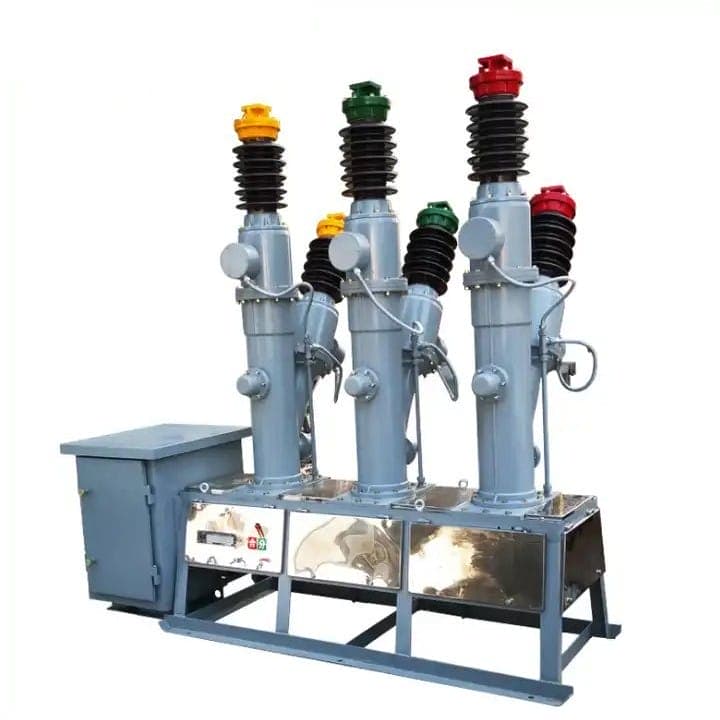
Table of Contents
- 1. The Foundation: What Are the Critical Electrical Ratings?
- 2. The Technology Decision: Which Interrupting Medium Is Right for You?
- 3. Environmental and Installation Considerations: Where Will It Operate?
- 4. The Economics of Ownership: Beyond the Purchase Price
- 5. Future-Proofing: How Will You Maintain and Monitor the Breaker?
- Frequently Asked Questions (FAQ)
- Conclusion and Next Steps
1. The Foundation: What Are the Critical Electrical Ratings?
Imagine a substation engineer tasked with upgrading a 145 kV switchyard. The project requires a new High Voltage Circuit Breaker to protect a critical transmission line. The existing infrastructure includes a transformer rated for 40 MVA, and the fault level at the bus has been calculated to be 40 kA. The selection process begins with a series of fundamental electrical ratings that define the breaker's capability. These ratings are not arbitrary numbers; they are the mathematical expression of the circuit breaker's ability to operate safely and reliably within the power system's electrical environment. The engineer must meticulously evaluate each rating to ensure that the chosen device is not under- or over-specified. The following table presents the primary electrical ratings and their practical significance.
| Rating | Definition | Practical Consideration |
| Rated Voltage | Maximum continuous operating voltage | Must match system voltage; 72.5 kV, 145 kV, 245 kV, 550 kV are common |
| Rated Current | Continuous current carrying capacity | Must exceed maximum load current, including future load growth |
| Short-Circuit Breaking Current | Maximum fault current the breaker can interrupt | Must exceed maximum symmetrical fault current; 31.5 kA, 40 kA, 63 kA typical |
| Short-Circuit Making Current | Peak current the breaker can withstand when closing onto a fault | Typically 2.5 times the breaking current; defines mechanical strength |
| Rated Short-Time Current | Current the breaker can carry for a short time (1-3 seconds) during fault | Determines thermal withstand capability; important for system coordination |
| Transient Recovery Voltage (TRV) | Voltage that appears across the contacts after current interruption | Critical for interrupting capability; influenced by system characteristics |
The rated voltage is the foundation of the selection. It is the maximum continuous voltage that the High Voltage Circuit Breaker can withstand. For a 145 kV system, the breaker must be rated for at least 145 kV. However, it is also important to consider the maximum operating voltage, which can be slightly higher than the nominal voltage. The rated current must be sufficient to carry the normal load, with a margin for future growth. The short-circuit breaking current, however, is the most critical safety rating. It defines the maximum fault current that the High Voltage Circuit Breaker can safely interrupt. If this rating is too low, the breaker may fail catastrophically in the event of a fault. At Lugao Power Co.,Ltd., we offer a range of High Voltage Circuit Breaker with various short-circuit breaking capacities to match different system requirements, ensuring that the device is neither over-specified nor under-specified.
The TRV is perhaps the most subtle but equally important rating. When a breaker interrupts a fault, a voltage transient appears across the opening contacts. This TRV is characterized by its amplitude, rate of rise, and frequency. The High Voltage Circuit Breaker must be designed to withstand the TRV without reigniting the arc. The TRV is determined by the system's impedance and the point on the wave at which the interruption occurs. For a specific application, the TRV must be calculated or obtained from the system studies and compared with the breaker's rated TRV capability. Our factory's engineering team provides support in assessing these complex parameters, helping customers select a High Voltage Circuit Breaker that is perfectly matched to the transient characteristics of their specific network.
2. The Technology Decision: Which Interrupting Medium Is Right for You?
Once the electrical ratings are defined, the engineer faces a fundamental technology decision: what type of interrupting medium should the High Voltage Circuit Breaker use? The market is dominated by three main technologies: SF6 gas, vacuum, and oil. However, oil breakers are increasingly rare in new installations, and the industry is actively developing eco-efficient alternatives. Each technology has distinct characteristics that make it suitable for different applications. The decision is not simply a matter of cost; it involves evaluating performance, environmental impact, maintenance needs, and the specific operating conditions of the installation. Let's examine each of the key technologies in detail.
SF6 Circuit Breakers are the dominant technology for high-voltage applications (72.5 kV and above). They use sulfur hexafluoride (SF6) gas as both the insulating and arc-quenching medium. SF6 is highly electronegative, meaning it absorbs free electrons from the arc, rapidly deionizing the gap and preventing arc restrike. This property makes SF6 breakers exceptionally efficient at interrupting fault currents, with a high current-carrying capacity and short interruption times. They are also compact, requiring less space than other technologies. However, SF6 is a potent greenhouse gas with a global warming potential (GWP) of 23,500 times that of CO2. This has led to increasing scrutiny and regulations on its use. Our factory at Lugao has developed a range of SF6 High Voltage Circuit Breaker with leakage rates of less than 0.1% per year, significantly reducing their environmental impact.
Vacuum Circuit Breakers are the dominant technology for medium voltage applications (up to 40.5 kV). They use a vacuum as the interrupting medium. When the contacts part, the arc is confined within the vacuum interrupter. The arc is extinguished at the first current zero because the vacuum provides no conductive path for the arc to restrike. Vacuum breakers are highly reliable, require very little maintenance, and are environmentally friendly. However, they cannot be used at higher voltages because the vacuum interrupter's dielectric strength is limited. They are also sensitive to overvoltages, such as those caused by switching unloaded transformers. For high-voltage applications, a single vacuum interrupter is insufficient, and multiple interrupters in series would be required, increasing complexity and cost.
Eco-Efficient Alternatives are emerging as a response to the environmental concerns of SF6. These technologies use gases with a much lower GWP, such as AirPlus (a mixture of nitrogen and oxygen with a trace amount of a fluoroketone) or other synthetic gases. These gases offer similar dielectric and arc-quenching performance to SF6 but with a GWP that is 100 to 2,000 times lower. This is a significant advantage for utilities and industries that are seeking to reduce their carbon footprint. However, these alternatives are not yet as widely adopted as SF6, and they may require larger breaker enclosures or different mechanical designs. Our factory is actively developing High Voltage Circuit Breaker using eco-efficient gases, ensuring our customers have a viable and environmentally responsible path forward.
The following table provides a concise summary of the key considerations for each technology.
| Technology | Typical Voltage Range | Environmental Impact | Maintenance Needs |
| SF6 | 72.5 kV – 800 kV | High GWP; requires leak management | Moderate; gas density monitoring required |
| Vacuum | Up to 40.5 kV | Negligible | Low; sealed for life |
| Eco-Efficient (AirPlus, etc.) | Up to 145 kV (emerging) | Very Low | Similar to SF6; gas handling required |
3. Environmental and Installation Considerations: Where Will It Operate?
The physical environment in which a High Voltage Circuit Breaker will be installed is a critical factor in its selection. The same breaker that performs flawlessly in a climate-controlled indoor substation may fail prematurely in a coastal environment with salt spray, or in a desert environment with extreme heat and dust. Engineers must evaluate the environmental conditions at the proposed installation site and match them to the appropriate breaker design. The key environmental factors to consider are: ambient temperature, humidity, altitude, pollution level, seismic activity, and the presence of corrosive agents. Each of these factors can significantly impact the reliability and longevity of the High Voltage Circuit Breaker.
Temperature is a primary concern. The operating mechanism, the insulating gas (in the case of SF6 or eco-efficient alternatives), and the dielectric properties of the insulation all depend on temperature. SF6 gas, for example, will liquefy at low temperatures (approximately -25°C at 5 bar), which reduces its insulating and interrupting capability. To address this, SF6 breakers installed in cold climates are equipped with heaters and gas density monitoring systems that detect gas pressure drops caused by liquefaction. Similarly, extreme heat can accelerate the aging of insulating materials and increase the wear on mechanical components. Our factory offers High Voltage Circuit Breaker with a wide range of operating temperature options, including cold-weather packages for installations in arctic conditions.
Altitude is another important factor. As altitude increases, the air pressure decreases, which reduces the dielectric strength of the air. For outdoor installations above 1,000 meters, the insulation distances must be increased. For SF6 breakers, the gas pressure is typically adjusted to compensate for the reduced atmospheric pressure. Pollution from industrial areas, coastal regions, or agricultural zones can lead to a build-up of conductive contaminants on the insulators, increasing the risk of external flashovers. This is addressed by specifying insulators with a higher creepage distance, or by applying anti-contamination coatings. Our factory at Lugao provides High Voltage Circuit Breaker with customizable insulation levels to meet the specific pollution class requirements of the installation site.
Seismic activity must be considered in areas prone to earthquakes. The High Voltage Circuit Breaker must be capable of withstanding the dynamic loads generated by a seismic event. This involves designing the support structure and ensuring the breaker's mechanical components can withstand the imposed acceleration. Corrosive environments, such as those found near coastal regions or in chemical plants, require special attention to material selection. Stainless steel fasteners, corrosion-resistant coatings on the enclosure, and careful sealing of all components are essential to prevent premature failure. By carefully evaluating these environmental factors, engineers can select a High Voltage Circuit Breaker that is not only electrically suitable but also physically robust enough to withstand the rigors of its operating environment.
4. The Economics of Ownership: Beyond the Purchase Price
The initial purchase price of a High Voltage Circuit Breaker is often the most visible cost, but it is only a fraction of the total cost of ownership over the device's service life. A comprehensive economic analysis must consider not only the purchase price but also the installation cost, the ongoing maintenance and operational costs, and the cost of eventual disposal or replacement. Choosing a breaker with a higher upfront cost but lower maintenance requirements can be significantly more economical over the long term. Conversely, selecting a cheap, low-quality breaker can lead to frequent failures, high maintenance costs, and expensive downtime. The economic decision must be based on a lifecycle cost analysis that reflects the specific operational context of the installation.
Installation costs can vary significantly depending on the type and design of the High Voltage Circuit Breaker. SF6 breakers require specialized gas handling equipment and trained personnel for installation, which adds to the cost. Vacuum breakers are typically simpler to install. Maintenance costs are a significant component of the lifecycle cost. SF6 breakers require periodic maintenance, including checks of gas pressure, contact wear, and mechanical operation. Gas handling procedures must be followed strictly. Vacuum breakers, by contrast, are sealed for life and require very little maintenance. The frequency of maintenance and the cost of spare parts must be factored into the economic analysis.
Operational costs include the energy losses in the breaker's main contacts, which are typically small but not negligible. Downtime costs are perhaps the most significant variable. In many industries, an hour of downtime can cost tens of thousands of dollars in lost production. A more reliable High Voltage Circuit Breaker, with a lower probability of failure, can provide a substantial economic benefit by reducing the risk of costly outages. To help customers with this analysis, our factory at Lugao Power Co.,Ltd. offers a lifecycle cost assessment service, which provides a detailed comparison of the total cost of ownership for different breaker options.
5. Future-Proofing: How Will You Maintain and Monitor the Breaker?
The selection of a High Voltage Circuit Breaker is not a decision that ends when the device is energized. The long-term performance and reliability of the breaker depend on a well-planned maintenance and monitoring strategy. Maintenance requirements vary by technology, but a proactive approach is essential for ensuring decades of reliable service. The trend in the industry is moving towards condition-based maintenance, which uses continuous monitoring of the High Voltage Circuit Breaker's key parameters to predict when maintenance is needed, rather than relying on a fixed schedule. This approach maximizes the breaker's availability and minimizes the risk of unexpected failures.
Key parameters that should be monitored include: the operating mechanism's timing, the contact travel and resistance, the SF6 gas density and pressure, the temperature of critical components, and the electrical circuit's health. Modern High Voltage Circuit Breaker can be equipped with sensors that continuously monitor these parameters and report them to a central control system. This allows maintenance teams to identify issues early, before they become serious. Our factory's High Voltage Circuit Breaker products are compatible with a range of condition monitoring systems, enabling our customers to implement a condition-based maintenance strategy. We also provide comprehensive training for maintenance personnel on the inspection, testing, and repair of our equipment.
Frequently Asked Questions (FAQ)
Question 1: How do I determine the correct short-circuit breaking capacity for my application?
Answer: The short-circuit breaking capacity must be equal to or greater than the maximum calculated fault current at the breaker's installation point. This is determined by a detailed power system study that considers the sources of fault current (generators, grid), the impedance of transformers, transmission lines, and cables, and the system configuration. The study will produce a value for the symmetrical short-circuit current (kA) and the X/R ratio, which determines the asymmetrical current. The circuit breaker's rated short-circuit breaking current, which is a symmetrical value, must be greater than the calculated symmetrical current, and the breaker must also be capable of interrupting the asymmetrical current. Our engineering team at Lugao Power Co.,Ltd. can assist with this calculation.
Question 2: What is the difference between a dead tank and a live tank circuit breaker?
Answer: In a dead tank High Voltage Circuit Breaker, the interrupter is housed in a grounded metal enclosure. This provides a clear safety advantage, as the high voltage is enclosed and the enclosure is at ground potential. They are typically easier to maintain and offer more design flexibility for additional equipment like CTs. In a live tank breaker, the interrupter is located at high voltage, and the tank is not grounded. Live tank breakers are lighter and have lower dielectric losses, making them more efficient for some applications. The choice depends on the specific substation design and the utility's engineering philosophy.
Question 3: How do I choose between an SF6 breaker and an eco-efficient alternative?
Answer: The choice depends on the application's requirements and the environmental priorities of the operator. SF6 breakers have a proven track record of high reliability and excellent interrupting capability, and they are available for all voltage levels. Eco-efficient alternatives, such as AirPlus, offer a significantly lower GWP, making them attractive for organizations committed to sustainability. However, these alternatives may have a higher initial cost and may not be available for all voltage levels. Our factory at Lugao Power Co.,Ltd. offers both SF6 and eco-efficient options, enabling our customers to make a choice that balances performance, cost, and environmental responsibility.
Question 4: What is the significance of the transient recovery voltage (TRV) in circuit breaker selection?
Answer: TRV is the voltage that appears across the contacts of the High Voltage Circuit Breaker immediately after the arc is interrupted. The TRV can be complex, with a high rate of rise and peak value, and it depends on the system's inductance and capacitance. The High Voltage Circuit Breaker must be capable of withstanding the TRV without restriking. This is a critical factor in determining the interruption capability, especially for breakers located near transformers or reactors. Our factory's engineering team can help assess the TRV requirements for your specific application and select a breaker with the appropriate rated TRV capability.
Question 5: How often does a high voltage circuit breaker need to be maintained?
Answer: The maintenance frequency depends on the type of breaker and the operating conditions. SF6 breakers typically require inspection and maintenance at intervals of 5-10 years, depending on the manufacturer's recommendations and the number of operations. The maintenance includes checking the gas density, contact wear, and operating mechanism. With the integration of condition monitoring systems, we can transition to a condition-based maintenance approach, where maintenance is performed only when the monitoring data indicates a need.
Conclusion: Making the Right Choice for a Reliable Future
Selecting the right High Voltage Circuit Breaker is a critical engineering decision that impacts the safety, reliability, and economic performance of the power system for decades. By carefully considering the electrical ratings, technology options, environmental factors, life-cycle costs, and maintenance strategies, engineers can make informed choices that ensure the long-term integrity of their network. The decision requires a deep understanding of the application's requirements and a thorough evaluation of the available options. At Lugao Power Co.,Ltd., we are committed to supporting our customers throughout the selection process, providing expert guidance, reliable products, and comprehensive after-sales support.
We invite you to learn more about our extensive range of High Voltage Circuit Breaker products and to contact our engineering team for a consultation on your specific application. Our experience, combined with a commitment to quality and innovation, ensures that you receive a solution perfectly suited to your needs. Contact Lugao Power Co.,Ltd. today to discover how we can help you protect and optimize your power system.