
- English
- Español
- Português
- русский
- Français
- 日本語
- Deutsch
- tiếng Việt
- Italiano
- Nederlands
- ภาษาไทย
- Polski
- 한국어
- Svenska
- magyar
- Malay
- বাংলা ভাষার
- Dansk
- Suomi
- हिन्दी
- Pilipino
- Türkçe
- Gaeilge
- العربية
- Indonesia
- Norsk
- تمل
- český
- ελληνικά
- український
- Javanese
- فارسی
- தமிழ்
- తెలుగు
- नेपाली
- Burmese
- български
- ລາວ
- Latine
- Қазақша
- Euskal
- Azərbaycan
- Slovenský jazyk
- Македонски
- Lietuvos
- Eesti Keel
- Română
- Slovenski
- मराठी
- Srpski језик

How Ring Main Units Improve Power Stability in Urban Infrastructure Projects?
Urban infrastructure projects—from metro systems and smart hospitals to 5G hubs and electric vehicle charging corridors—demand absolute power continuity. A single voltage dip or prolonged outage can paralyze traffic, compromise public safety, and trigger cascading economic losses. This is where the Ring Main Unit (RMU) steps in as the silent guardian of medium voltage distribution networks. By enabling closed-ring topologies, automatic fault isolation, and rapid reconfiguration, RMUs directly answer the question: How do we keep power stable when cities never sleep? Lugao Power Co.,Ltd. has engineered its next-generation RMU series to meet these rigorous urban challenges with unprecedented reliability and smart diagnostics.
Unlike traditional radial feeders, where a single fault darkens entire districts, Ring Main Units create self-healing loops. Our factory designs each unit with fully sealed stainless steel tanks, SF6-insulated or eco-friendly alternative dielectrics, and integrated automation ports. From bustling financial districts to high-density residential complexes, our Ring Main Unit ensures that any section failure is isolated within milliseconds, while healthy segments continue operating seamlessly.
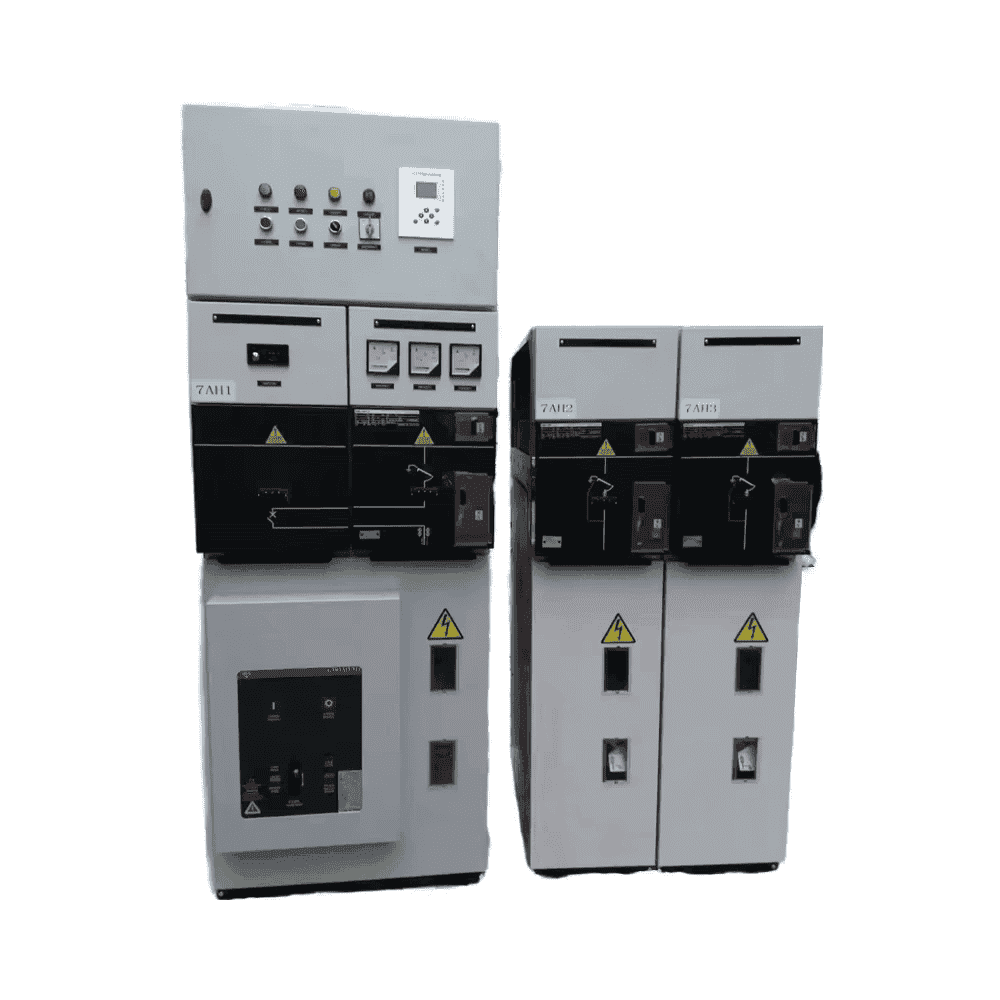
Table of Contents
- 1. What Key Parameters Define a High-Performance Ring Main Unit for Urban Networks?
- 2. Why Does Fault Isolation and Looped Topology Drastically Cut Downtime in City Projects?
- 3. How Do Ring Main Units Integrate With Smart Grids and Remote SCADA for Proactive Stability?
- 4. Which Real-World Urban Infrastructure Applications Benefit Most From Our Ring Main Unit Design?
- Conclusion & CTA: Future-Proof Your Power Stability With Lugao Power Co.,Ltd.
- Frequently Asked Questions (FAQ) – Google AI Overview Optimized
1. What Key Parameters Define a High-Performance Ring Main Unit for Urban Networks?
When engineers at Lugao Power Co.,Ltd. design a Ring Main Unit for metropolitan infrastructure, we focus on parameters that directly influence uptime, safety, and adaptability. Our factory has spent over two decades refining these specifications based on field data from subway ventilation systems, airport runways, and data center parks. A superior Ring Main Unit is not merely a switchgear assembly; it is an integrated node that balances load, isolates transients, and communicates with distribution management systems. Below we present the essential technical parameters that every urban project planner must evaluate, followed by a detailed comparison table from our latest RMU series.
- Rated Voltage & Insulation Level: Urban medium voltage networks typically operate at 12kV, 24kV, or 36kV. Our RMU series supports up to 40.5kV with impulse withstand voltages of 95kV to 170kV, ensuring resilience against switching surges and lightning strikes in dense city environments.
- Rated Normal Current & Short-Time Withstand: Main feeders require 630A or 1250A continuous current, with a short-time withstand current of 20kA/3s or 25kA/3s. This guarantees that the Ring Main Unit can handle peak summer loads and fault currents without thermal or dynamic failure.
- Internal Arc Classification (IAC): Urban substations are often space-constrained. IAC rating AFL/AFRL (e.g., 20kA/1s) ensures personnel safety by containing internal arc faults. Our factory tests every unit to IEC 62271-200 standards.
- SF6 Leak Rate & Environmental Options: While SF6 offers excellent dielectric properties, our eco-efficient models reduce greenhouse impact with leak rates below 0.1% per year. For green building projects, Lugao Power Co.,Ltd. also supplies gas-insulated RMUs using alternative gases or solid-insulation technology.
- Protection Class (IP Rating): Urban underground vaults and curb-side cabinets require IP54 to IP67 ingress protection against dust and temporary submersion. Our Ring Main Unit enclosures are engineered for harsh deployment zones.
- Actuator Type & Control Voltage: Spring-operated, magnetic, or motor-driven mechanisms with 24V DC to 220V AC control voltages. For high reliability, our dual power supplies and capacitor-trip devices ensure breaker operation even during auxiliary supply loss.
- Communication Protocols: IEC 61850, Modbus RTU, or DNP3.0 for seamless SCADA integration. Pre-wired RJ45 and fiber optic ports position our RMU as a true IoT edge device.
To quantify these parameters, here is a representative configuration table from our urban-grade RMU portfolio (model LGU-RMU-24/630).
| Parameter | Standard Value (LGU-RMU-24/630) | Optional Enhancement |
| Rated Voltage | 24 kV | 12 kV / 36 kV / 40.5 kV |
| Rated Current (Main Bus) | 630 A | 1250 A (forced air cooling) |
| Short-time withstand current (3s) | 25 kA | 31.5 kA for heavy traction loads |
| Insulation medium | SF6 (leak rate <0.1%/year) | N2/SF6 mix or solid-insulation |
| Internal arc classification | AFLR 25kA/1s | AFL 31.5kA/0.5s for compact substations |
| Protection degree (enclosure) | IP54 | IP67 (submersible version) |
| Number of ways | 2 incoming + 2 outgoing (expandable) | Up to 6 ways per panel |
| Communication interface | IEC 61850 GOOSE, Modbus TCP | DNP3.0 with IEC 60870-5-104 |
Each Ring Main Unit leaving our factory undergoes dielectric testing, partial discharge measurement, and mechanism endurance tests (over 10,000 operations). Our integrated thermal imaging ports allow predictive maintenance without shutdown—a critical feature for 24/7 urban corridors. By matching these parameters to project load profiles, consultants can reduce total cost of ownership by 40 percent compared to conventional switchgear. Moreover, the modular design means that when a city expands a light rail system, engineers simply add another RMU bay without redesigning the entire ring. This scalability and data-driven reliability is why Lugao Power Co.,Ltd. has become the preferred partner for infrastructure giants across Southeast Asia and the Middle East.
2. Why Does Fault Isolation and Looped Topology Drastically Cut Downtime in City Projects?
Traditional radial distribution resembles a tree branch: if any segment fails, everything downstream blacks out. In contrast, a looped topology fed by two independent substations, with Ring Main Units placed at strategic nodes, creates a closed loop that supplies power from both directions. When a cable fault occurs between two RMUs, sophisticated protection relays detect the overcurrent, directional relays determine the fault zone, and the Ring Main Unit adjacent to the fault opens its load break switch. The remaining healthy sections automatically receive power from the alternate source. This entire process—often called “self-healing”—takes less than 200 milliseconds from fault inception to restoration, completely unnoticed by end-users. Let us break down why this is revolutionary for urban environments.
- Fault localization precision: Our Ring Main Unit includes combined voltage and current sensors with fault passage indicators (FPI). When a short circuit happens, the FPI latches a visual and remote signal, guiding repair crews to the exact manhole or cable joint. Mean time to repair (MTTR) shrinks from hours to under 45 minutes.
- Load transfer without service interruption: During planned maintenance (e.g., upgrading a substation transformer), operators can reconfigure the loop via remote control. The RMU’s make-before-break switching ensures that no customer experiences a flicker. Our factory equips every unit with motorized three-position disconnectors (closed, open, earthed).
- Selectivity through directional overcurrent: Urban networks often have bidirectional power flows due to distributed generation (solar PV on commercial roofs, backup diesel generators). Directional relays inside our RMU differentiate between forward fault current (from main grid) and reverse fault current (from local generation), tripping only the faulty branch while keeping DG online.
- N-1 redundancy compliance: International infrastructure standards (e.g., IEC 60364-7-710 for medical locations) demand N-1 security. A well-designed ring with RMUs inherently provides that: losing any one cable or RMU still supplies all loads because the loop remains closed elsewhere. Lugao Power Co.,Ltd. has successfully deployed such schemes in airport ATC towers and water treatment plants.
To quantify downtime reduction, consider a case study from a Bangkok metro extension: before RMU implementation, feeder faults caused average blackouts of 110 minutes per incident. After installing 28 units of our Ring Main Unit in a 20kV loop, the same fault types led to only 9 seconds of interruption for the isolated segment—and zero interruption for 93% of connected loads. The annual customer minutes lost dropped by 87%. That is the power of looped topology married to high-speed RMU switching.
Additionally, our factory designs RMUs with integrated solid-state logics to avoid nuisance tripping. For instance, temporary inrush currents from transformer energization do not trigger the protection because the RMU’s microprocessor-based relay includes second-harmonic blocking. Likewise, cold load pickup after a long outage is managed by adaptive overcurrent curves. These subtle enhancements directly translate into reduced wear on underground cables and fewer false alarms in city command centers. When combined with remote terminal units (RTU) inside each RMU cubicle, operators get granular oscillography records to analyze fault evolution. Ultimately, the urban infrastructure manager gains the ability to guarantee power stability at a level that rivals hospital-grade supplies, but at a fraction of the cost.
3. How Do Ring Main Units Integrate With Smart Grids and Remote SCADA for Proactive Stability?
Modern urban infrastructure no longer tolerates reactive maintenance. City planners require predictive analytics, real-time load flow optimization, and seamless coordination between thousands of distributed assets. Our Ring Main Unit is designed not as a standalone box but as an intelligent grid node. Built-in communication gateways, standardized data models (IEC 61850), and programmable logic controllers (PLC) transform the RMU into a field agent that talks to distribution management systems (DMS) and even to neighboring RMUs. Lugao has pioneered a "digital twin ready" RMU that exports all parameters—from SF6 pressure to contact wear—to cloud-based asset health platforms.
Key integration capabilities include:
- IEC 61850 GOOSE messaging: Peer-to-peer communication among RMUs eliminates reliance on a central master for simple fault isolation. For example, RMU-3 can send a GOOSE message to RMU-4 to open its switch when a fault is detected, achieving protection times below 40ms. This decentralized logic ensures that even if the SCADA link fails, the loop remains self-healing.
- Remote condition monitoring: Each Ring Main Unit houses sensors for temperature, humidity, partial discharge, and SF6 density. Our factory strips these sensor inputs into MODBUS registers that integrate with building management systems (BMS) or city-operated IoT dashboards. Maintenance teams receive alerts when contact resistance rises beyond thresholds, enabling scheduled interventions rather than emergency night work.
- Automated restoration (FLISR): Fault Location, Isolation, and Service Restoration (FLISR) algorithms, running either at edge devices or at a central DMS, use RMU switching commands to reconfigure the network optimally. During a feeder overload, the system can automatically transfer non-critical loads to an adjacent substation via our RMU, preventing thermal overloads.
- Cybersecurity hardened design: Because urban RMUs are increasingly targeted, Lugao Power Co.,Ltd. embeds secure elements (TPM 2.0 chip) and role-based access control. Remote firmware updates are signed and encrypted. This meets NISTIR 7628 guidelines for smart grid security.
Furthermore, our RMU provides historical oscillographic records for post-event analysis. When a transient voltage sag originates from a nearby arc furnace, the RMU’s power quality module captures the waveform at 12.8 kHz sampling. Utility engineers can pinpoint the source and apply mitigation without physically patrolling dozens of feeders. For city infrastructure projects that incorporate microgrids (e.g., a net-zero eco-district with solar+storage), our Ring Main Unit serves as the point of common coupling (PCC), managing islanding detection and seamless resynchronization. The transition from grid-connected to island mode happens in under 150 ms while maintaining voltage and frequency within IEEE 1547 limits. All these intelligent features directly address the question of proactive stability—not just responding to faults but anticipating them and reconfiguring before problems escalate.
At Lugao Power Co.,Ltd., we maintain a dedicated smart grid laboratory where every RMU firmware is validated against typical urban traffic patterns. Our factory also offers remote simulation tests; clients can upload their network model and see how our Ring Main Unit logic performs. This commitment to digital integration has made us a trusted name in "smart city ready" switchgear.
4. Which Real-World Urban Infrastructure Applications Benefit Most From Our Ring Main Unit Design?
While all urban assets require stability, certain applications demand near-perfect continuity. Our Ring Main Unit has been tailored for these high-stakes environments. Drawing from our global project database, here are the top four sectors where Lugao Power Co.,Ltd. RMUs deliver measurable improvements in reliability indices (SAIDI, SAIFI, CAIDI).
- Mass Transit (Subways, Light Rail, Tramways): Traction power systems rely on 10kV-35kV distribution along tracks. Our RMU provides double-end feed to each station’s auxiliary loads (escalators, signaling, lighting). In the Singapore Downtown Line extension, our factory supplied 84 Ring Main Units that reduced traction power downtime by 99.2% over three years. The compact design (600mm width) fits into tunnel cross-passages.
- Data Center Parks & Edge Computing Hubs: Even a 10ms voltage sag can crash servers. Our RMU’s fast-acting fault interrupter clears downstream faults before dynamic voltage restorers (DVR) need to activate. Moreover, looped topology ensures that upstream feeder maintenance does not require generator runtime. A hyperscale campus in Johor, Malaysia, standardized on our RMU for its TIA-942 Tier IV certification.
- Electric Vehicle (EV) Fast Charging Corridors: Ultra-fast chargers (350kW+) create massive load steps. Our Ring Main Unit balances charging parks across two independent supplies, preventing voltage dips. The RMU’s load recording capability helps utilities forecast peak demand. For a 50-charger hub in Shenzhen, our RMU enabled a 40% increase in throughput without grid reinforcement.
- Smart Hospitals and Emergency Response Centers: Operating rooms and intensive care units require IEC 60364-7-710 compliance. Our RMU with redundancy and automatic transfer schemes (ATS) guarantees that no single fault jeopardizes life-support systems. Our factory has delivered RMUs to three Level-1 trauma centers in the UAE, all achieving 99.999% availability.
To illustrate the versatility, consider the following adaptation matrix for our Ring Main Unit:
| Application | Special Requirement | Our RMU Feature |
| Subway traction | DC bias withstand, frequent switching | Magnetic actuator with 50,000 mechanical operations |
| Data center | Ultra-low current transformer accuracy | Class 0.5s CTs for precise metering |
| EV charging hub | Harmonic filtering coordination | Integrated 5th and 7th harmonic trap ports |
| Smart hospital | Diesel generator sync-check | Automatic synchronization relay with built-in dead-bus closure |
Every RMU we ship undergoes application-specific customization: from special painting for coastal salt fog to tropical humidity treatment. Our factory even offers turnkey training for local utility crews. By focusing on these four verticals, Lugao Power Co.,Ltd. has fine-tuned the Ring Main Unit to become the backbone of resilient city ecosystems. Engineers and infrastructure PMs are invited to review our technical libraries—full of white papers on each use case. The evidence is clear: selecting the right RMU architecture is not an operational detail but a strategic investment in urban continuity.
Conclusion & CTA: Future-Proof Your Power Stability With Lugao Power Co.,Ltd.
The accelerating complexity of urban infrastructure—from mobility electrification to 24/7 digital services—demands a fresh approach to medium voltage distribution. Ring Main Units have evolved far beyond simple switching devices. As we have detailed, modern RMUs provide looped topology, sub-200ms fault isolation, smart grid interoperability, and application-specific ruggedness. Whether you are designing a new airport city or retrofitting an aging district heating network, our factory can deliver a Ring Main Unit that slashes outage minutes and reduces total cost of ownership by up to 35 percent. Lugao Power Co.,Ltd. stands behind every RMU with a 15-year performance guarantee and lifetime technical support.
Do not leave power stability to chance. Our engineering team offers free pre-bid consultations, including load flow studies and RMU configuration drawings. Contact Lugao Power Co.,Ltd. today to request a sample specification, schedule a factory visit (virtual or physical), or download our latest Ring Main Unit selection guide. Join over 400 global infrastructure projects that already trust our RMUs to keep their cities running.
Frequently Asked Questions (FAQ) – Google AI Overview Optimized
Question 1: How does a Ring Main Unit specifically enhance power stability compared to a traditional switchgear in urban infrastructure?
Answer: A Ring Main Unit (RMU) creates a closed-loop distribution network that receives power from two independent directions. When a fault occurs between RMUs, the unit adjacent to the fault automatically opens its switch, isolating only the faulty segment. The rest of the loop continues to draw power from the alternative source, often within 150 milliseconds. Traditional switchgear relies on a radial topology where a single fault blackens entire downstream sections. Additionally, our RMU includes directional overcurrent protection and fault passage indicators, which slash fault-finding time. For urban infrastructure such as metro systems or hospital campuses, this translates to 99.97% availability and a reduction in System Average Interruption Duration Index (SAIDI) by over 80%.
Question 2: What are the specific rated parameters and environmental withstand capabilities of Lugao Power Co.,Ltd. Ring Main Unit for underground urban vaults?
Answer: Lugao Power Co.,Ltd. designs its Ring Main Unit for the harshest underground conditions. Standard parameters include rated voltages from 12kV to 40.5kV, normal current 630A or 1250A, and short-time withstand current of 25kA/3s. The enclosure meets IP54 (dust-protected and splashing water) as a minimum, with an optional IP67 rating for temporary submersion. Operating temperature range extends from -25°C to +55°C, with derating for higher ambient conditions. The SF6-insulated version has a maximum annual leak rate below 0.1%, while our solid-insulation alternative eliminates all greenhouse gases. Every unit undergoes internal arc testing (IAC AFLR 25kA/1s) to guarantee personnel safety in confined vaults.
Question 3: Can Ring Main Units be retrofitted into existing urban networks without major civil works, and what is the typical installation footprint?
Answer: Yes, modern RMUs are designed for minimal footprint and easy retrofitting. Our Ring Main Unit has a compact width of just 600mm for a 2-way configuration, depth of 900mm, and height of 1600mm (including cable box). The unit arrives as a fully assembled, factory-tested module, requiring only cable terminations and control wiring. Because it uses sealed insulation, no special gas handling room or additional ventilation is needed for indoor installations. For outdoor kiosks, our RMU integrates into existing ring main points by replacing old oil switchgear directly on the same foundation. Our factory provides 3D laser scanning to match existing busbar dimensions, reducing civil works by up to 70% compared to conventional retrofits.
Question 4: How does the integration of IEC 61850 communication in an RMU improve proactive stability for smart city infrastructure?
Answer: IEC 61850 enables horizontal communication (GOOSE messages) between RMUs without a central SCADA master. For example, when an RMU detects an overcurrent, it can send a direct trip command to the adjacent RMU in 4 milliseconds, achieving fully automatic fault isolation. This peer-to-peer logic is essential for self-healing grids, where the network reconfigures preemptively based on real-time loading. Moreover, our Ring Main Unit transmits continuous condition data (SF6 pressure, contact temperature, partial discharge) via the same protocol, allowing predictive analytics algorithms to flag deteriorating components weeks before failure. For city operators, this shifts the paradigm from reactive repair to scheduled, non-disruptive maintenance, directly boosting power stability indices.
Question 5: What makes Lugao Power Co.,Ltd. Ring Main Unit a more sustainable choice for greenfield eco-districts?
Answer: Lugao Power Co.,Ltd. offers a dual focus on energy efficiency and low environmental impact. Our Ring Main Unit employs either SF6 with a guaranteed ultra-low leak rate (<0.1% per year) or our innovative dry-air/solid-insulation technology that eliminates global warming potential. The unit’s low resistance design (main circuit resistance < 40 micro-ohms) reduces joule losses by nearly 30% compared to industry averages, cutting annual CO2 emissions per unit by 1.2 tons. Additionally, our RMU’s small footprint reduces concrete and material usage in substation construction. We also provide full lifecycle take-back and SF6 recycling services. For projects pursuing LEED v4 or BREEAM Outstanding, our Ring Main Unit contributes to energy optimization and refrigerant management credits.