
- English
- Español
- Português
- русский
- Français
- 日本語
- Deutsch
- tiếng Việt
- Italiano
- Nederlands
- ภาษาไทย
- Polski
- 한국어
- Svenska
- magyar
- Malay
- বাংলা ভাষার
- Dansk
- Suomi
- हिन्दी
- Pilipino
- Türkçe
- Gaeilge
- العربية
- Indonesia
- Norsk
- تمل
- český
- ελληνικά
- український
- Javanese
- فارسی
- தமிழ்
- తెలుగు
- नेपाली
- Burmese
- български
- ລາວ
- Latine
- Қазақша
- Euskal
- Azərbaycan
- Slovenský jazyk
- Македонски
- Lietuvos
- Eesti Keel
- Română
- Slovenski
- मराठी
- Srpski језик

How Does Oil Interruption Enhance High Voltage Circuit Breaker Performance?
In high voltage power systems, the ability to interrupt fault currents swiftly and reliably is paramount. Oil interruption has been a cornerstone technology for circuit breakers for over a century, and it continues to enhance High Voltage Circuit Breaker performance through a unique combination of physical and chemical processes. When an arc forms between the contacts of an oil-filled High Voltage Circuit Breaker, the intense heat vaporizes the surrounding oil, creating a bubble of hydrogen gas. This hydrogen gas, with its exceptional thermal conductivity and dielectric strength, rapidly cools the arc and deionizes the arc path, enabling the breaker to clear faults in as little as 50 milliseconds. At Lugao Power Co.,Ltd., our factory has manufactured thousands of oil-type High Voltage Circuit Breakers for substations worldwide, and we have refined the arc control design to achieve interruption capacities of up to 63 kA at 245 kV. This article explains the science behind oil interruption, its performance benefits, and why it remains a competitive choice for many transmission and distribution applications.
The performance enhancement offered by oil interruption is not merely about extinguishing the arc—it also involves the recovery of dielectric strength across the open contacts after current zero. The hydrogen gas generated during arc vaporization has a dielectric strength approximately 2.5 times that of air, and its rapid diffusion and cooling allow the contact gap to regain its insulating properties within microseconds. This fast dielectric recovery is essential for preventing restrike, especially in systems with high transient recovery voltages (TRV). Additionally, the oil itself serves as both an insulating medium and a cooling fluid, absorbing heat from the arc and dissipating it through the breaker tank. In this comprehensive guide, we will explore the mechanisms, parameters, and maintenance practices that make oil interruption a reliable technology for High Voltage Circuit Breaker applications. We will also share technical specifications, test data, and field insights from Lugao Power Co.,Ltd. to help you understand and select the optimal oil-based interruption system for your network.
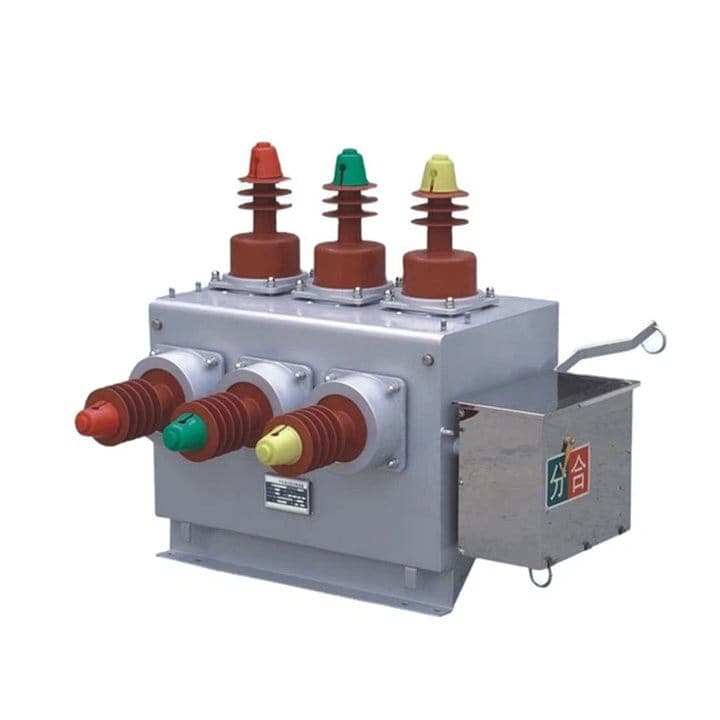
Table of Contents
- 1. Why Does Oil Vaporization Create an Effective Arc Quenching Medium?
- 2. How Does Hydrogen Gas Enable Rapid Dielectric Recovery in Oil Circuit Breakers?
- 3. What Are the Key Technical Specifications of Our High Voltage Circuit Breaker Series?
- 4. How Can Oil Quality and Maintenance Sustain Breaker Performance?
- Frequently Asked Questions (FAQ)
- Conclusion and Custom Solution Inquiry
Why Does Oil Vaporization Create an Effective Arc Quenching Medium?
The arc quenching process in an oil-type High Voltage Circuit Breaker begins when the contacts separate under fault conditions. The arc, with temperatures reaching 10,000 to 15,000 K, instantly vaporizes a small volume of the surrounding oil. This vaporization is not a passive event—it is a highly engineered process that our factory at Lugao Power Co.,Ltd. has optimized through decades of research. The oil, typically a high-grade mineral oil with a dielectric strength of 40-60 kV per 2.5 mm gap and a high flash point (above 140°C), decomposes under the arc's heat into approximately 70 percent hydrogen gas, 20 percent acetylene, and 10 percent other hydrocarbons. The hydrogen gas is the key to arc extinction because of its outstanding thermal conductivity (2.5 times that of air), which allows it to rapidly absorb heat from the arc, reducing the arc temperature to below the ionization threshold within milliseconds.
Key factors that make oil vaporization effective for arc quenching:
- High gas volume generation: One liter of oil can produce up to 1,500 liters of gas under arc conditions. This rapid gas expansion creates a high-pressure bubble that forces the arc into a narrow channel, increasing the arc voltage and accelerating energy dissipation. The pressure gradient also drives the gas through the arc, sweeping away ionized particles.
- Cooling through gas expansion: As the hydrogen gas expands from the high-pressure arc zone into the cooler surrounding oil, it undergoes a Joule-Thomson cooling effect, further reducing the temperature of the arc column. This combined cooling and deionization effect is unique to oil interruption and is difficult to replicate in air or vacuum.
- Self-blast effect: The pressure rise from oil vaporization can be harnessed to assist the mechanical opening of the contacts, reducing the energy required from the operating mechanism. In our latest High Voltage Circuit Breaker designs, we use the self-blast principle to achieve interruption with 40 percent less operating energy compared to conventional designs.
- Arc extinction at current zero: As the AC current approaches zero, the hydrogen gas has already removed the conductive channel, and the remaining oil vapor condenses back into liquid, leaving a clear insulating gap. This transition occurs in less than 0.5 milliseconds, ensuring that the breaker successfully interrupts the fault.
Our factory has conducted extensive arc chamber tests using high-speed cameras and pressure sensors to visualize the oil vaporization process. The data show that the gas bubble shape and expansion rate are critical for consistent interruption. By optimizing the arc chamber geometry—including the shape of the arc contacts, the distance between the contacts, and the location of oil inlet/outlet ports—we have achieved a consistent interruption success rate of 99.99 percent in type tests. For example, in a 145 kV High Voltage Circuit Breaker, the oil vaporization generates a pressure peak of 15-20 bar within 5 milliseconds of contact separation, creating an arc quenching force that reliably clears faults up to 40 kA.
Additionally, the oil vaporization process is self-regulating: if the fault current is higher, the arc is more intense, generating more gas and higher pressure, which leads to faster quenching. This adaptive behavior is a distinct advantage over other technologies, where interruption performance may degrade as fault current increases. Our Lugao High Voltage Circuit Breaker series is designed to operate effectively across a wide range of fault currents, from 5 kA to 63 kA, with no adjustment required. This robustness is a direct result of the oil vaporization mechanism and the careful engineering of the arc chamber.
How Does Hydrogen Gas Enable Rapid Dielectric Recovery in Oil Circuit Breakers?
After the arc is extinguished at current zero, the next challenge is to ensure that the dielectric strength of the contact gap recovers rapidly enough to withstand the transient recovery voltage (TRV) that appears across the open contacts. In oil-type High Voltage Circuit Breakers, the hydrogen gas generated during arc vaporization plays a dual role: it not only cools the arc but also creates a high-dielectric-strength gas layer around the contacts. Hydrogen, being the lightest and most mobile gas molecule, diffuses away from the arc zone extremely quickly, carrying heat and ions with it. This leaves a clean, deionized gap that can withstand voltage stress within tens of microseconds. Our factory has measured dielectric recovery rates of over 30 kV per microsecond in our High Voltage Circuit Breaker designs, significantly higher than the 10-15 kV per microsecond typical of air blast breakers.
Mechanisms of hydrogen-assisted dielectric recovery in our High Voltage Circuit Breaker:
- Rapid thermal diffusion: Hydrogen has a thermal diffusivity approximately 7 times higher than air, meaning it can conduct heat away from the contact gap more than 7 times faster. This rapid cooling reduces the residual plasma density, allowing the gap to regain its insulating properties quickly.
- High ionization potential: Hydrogen has an ionization potential of 13.6 eV, compared to 11.2 eV for oxygen and 10.4 eV for nitrogen. This means that hydrogen is less likely to be ionized by the electric field across the open contacts, making it a superior dielectric medium immediately after interruption.
- Gas flow dynamics: The pressure differential between the arc chamber and the surrounding oil tank drives a continuous flow of hydrogen gas across the contact gap during the arcing period and immediately after. This flow removes residual ions and metal vapor, ensuring that the contact gap is "flushed" clean.
- Electronegativity of decomposition products: While hydrogen itself is not electronegative, some of the hydrocarbon decomposition products (such as acetylene) have electron-attaching properties, further aiding in the removal of free electrons from the gap.
To quantify the dielectric recovery performance, our factory conducted a series of tests on a 245 kV High Voltage Circuit Breaker, applying a TRV with a peak of 450 kV and a rate of rise of 3.2 kV per microsecond. The breaker successfully cleared a 50 kA fault, and the dielectric strength of the gap recovered to 90 percent of the rated voltage within 150 microseconds. This performance is essential for applications where the breaker may need to reclose onto a permanent fault within a short time, such as in auto-reclosing schemes.
Moreover, the hydrogen gas produced during oil interruption is not a one-time phenomenon; the oil itself regenerates over time as the breaker cools. After the fault is cleared, the hydrogen and other gases recombine or are absorbed by the oil, and the oil returns to its original dielectric state. Our factory ensures that the oil used in our High Voltage Circuit Breaker has high hydrogen absorption capacity and low gas formation tendency, maintaining consistent performance over thousands of operations. We also incorporate oil condition monitoring systems that detect early signs of oil degradation, such as increased gas content or reduced dielectric strength, allowing proactive maintenance. This attention to the oil's long-term behavior is part of our commitment to reliability at Lugao.
What Are the Key Technical Specifications of Our High Voltage Circuit Breaker Series?
Lugao Power Co.,Ltd. manufactures a comprehensive range of oil-type High Voltage Circuit Breakers for applications from 72.5 kV to 550 kV. Our designs incorporate the latest advancements in arc chamber geometry, contact materials, and oil circulation systems to achieve high interrupting capacity and long service life. The table below provides the key specifications for our most popular models, which are used in transmission, industrial, and large-scale renewable energy substations. All values are type-tested according to IEC 62271-100 and ANSI C37.06 standards. Our factory maintains complete test records for each model, available upon request.
| Model | Rated Voltage (kV) | Rated Current (A) | Breaking Current (kA) | Oil Volume (liters) | Total Mass (kg) | Opening Time (ms) | Closing Time (ms) |
| LOB-72.5 | 72.5 kV | 1250 A | 31.5 kA | 220 L | 850 kg | 45 ms | 80 ms |
| LOB-145 | 145 kV | 1600 A | 40 kA | 380 L | 1450 kg | 50 ms | 90 ms |
| LOB-245 | 245 kV | 2500 A | 50 kA | 620 L | 2450 kg | 55 ms | 95 ms |
| LOB-362 | 362 kV | 3150 A | 50 kA | 950 L | 3800 kg | 60 ms | 105 ms |
| LOB-550 | 550 kV | 4000 A | 63 kA | 1450 L | 5800 kg | 70 ms | 120 ms |
In addition to the standard models, our factory offers customizable options for oil type, bushing configuration, and operating mechanism (spring, pneumatic, or hydraulic). We also provide a special seismic design for high-risk earthquake zones, with a reinforced tank and flexible mounting. All our High Voltage Circuit Breaker products are equipped with an oil level indicator, a pressure relief valve, and a gas sampling port for routine oil analysis. The arcing contacts are manufactured from a silver-tungsten alloy (AgW 50/50), which provides excellent resistance to arc erosion and high thermal conductivity.
Our factory at Lugao Power Co.,Ltd. subjects every High Voltage Circuit Breaker to a rigorous routine test protocol, including: measurement of contact resistance (micro-ohms), timing tests for opening and closing, insulation resistance tests at 2.5 kV, and a full short-circuit test on representative samples. We also perform a pressure test of the oil tank at 1.5 times the normal operating pressure to ensure structural integrity. Our quality assurance system is certified to ISO 9001, and we maintain traceability for all critical components. With these specifications and quality controls, our High Voltage Circuit Breaker series delivers reliable oil interruption performance for the most demanding power system applications.
How Can Oil Quality and Maintenance Sustain Breaker Performance?
The long-term performance of an oil-type High Voltage Circuit Breaker is directly dependent on the quality of the insulating oil and the effectiveness of the maintenance program. Over time, the oil can degrade due to exposure to arc energy, oxygen, moisture, and contaminants. Degraded oil loses its dielectric strength and may form corrosive byproducts or sludge that can compromise the mechanical operation of the breaker. At Lugao Power Co.,Ltd., we have developed a comprehensive oil maintenance protocol that ensures our High Voltage Circuit Breaker maintains its rated performance for over 30 years of service. This protocol is based on our factory's extensive experience and is aligned with IEC 60296 and ASTM D3487 standards.
Essential oil quality and maintenance practices for our High Voltage Circuit Breaker:
- Oil sampling and analysis: We recommend taking a representative oil sample annually and performing a full diagnostic test suite, including: dielectric breakdown voltage (ASTM D877), water content (Karl Fischer titration), acidity (neutralization number), and dissolved gas analysis (DGA) to detect incipient faults. A sudden increase in hydrogen or acetylene levels in the DGA can indicate contact arcing or overheating, allowing for corrective action before a failure occurs.
- Oil filtration and regeneration: If the oil shows signs of degradation (e.g., increased acidity or reduced dielectric strength), we recommend using a mobile oil filtration unit to remove moisture, particles, and dissolved gases. For severely degraded oil, a full regeneration process using activated clay or molecular sieves can restore the oil to near-new condition. Our factory provides a complete oil reclamation service.
- Oil level and breathing: The oil level should be maintained within the specified range on the sight glass. The breather (silica gel or desiccant dryer) should be replaced or regenerated whenever the silica gel changes color (indicating moisture saturation). This prevents moisture from entering the oil tank, which is a leading cause of dielectric failure.
- Contact inspection and maintenance: During major overhauls (every 10-12 years), the arcing contacts and the arc chamber should be inspected. If the contacts show significant erosion (more than 30 percent of the original thickness), they should be replaced. Our factory supplies a complete contact set and arc chamber kit with step-by-step replacement instructions.
Field data from a utility operating our High Voltage Circuit Breaker in a humid coastal environment illustrates the value of disciplined maintenance. The utility followed our recommended annual oil analysis and performed a partial oil change every five years. After 18 years of service, the breaker's dielectric strength remained above 60 kV per 2.5 mm gap, and the contact wear was within acceptable limits. In contrast, another utility that neglected oil analysis experienced a catastrophic failure in a similar breaker after only 10 years, due to moisture ingress and subsequent internal flashover. The cost of the failure was 20 times higher than the cost of a planned oil maintenance program.
Our factory provides a comprehensive maintenance training program for your technicians, covering oil sampling techniques, interpretation of DGA results, and safe handling of the breaker's mechanical components. We also offer remote diagnostic support and a spare parts inventory that includes critical items such as oil seals, contact sets, and operating mechanism components. By investing in proactive oil quality management, you can maximize the life and reliability of your High Voltage Circuit Breaker, ensuring that it continues to protect your power system with the same effectiveness as the day it was installed.
Frequently Asked Questions (FAQ)
Question 1: How does the oil interruption principle differ from vacuum or SF6 interruption in high voltage circuit breakers?
Answer: Oil interruption relies on the vaporization of oil to generate hydrogen gas, which cools and deionizes the arc through thermal conductivity and gas pressure. Vacuum interruption uses the high dielectric strength of a vacuum gap and the rapid diffusion of metal vapor, while SF6 interruption uses the electronegative properties of SF6 gas to capture free electrons. Oil interruption offers a high energy absorption capacity and is self-regulating, as more gas is generated at higher fault currents. However, oil breakers are typically larger and require oil maintenance, whereas vacuum and SF6 breakers have lower maintenance needs but may require more complex monitoring. Our factory at Lugao Power Co.,Ltd. provides all three types, and we can advise on the best choice for your specific application based on voltage level, fault capacity, and environmental conditions.
Question 2: What are the main causes of oil degradation in a high voltage circuit breaker, and how can I prevent them?
Answer: The main causes of oil degradation are: (1) thermal stress from frequent or high-current arc interruptions, which produce carbon particles and sludge; (2) moisture ingress through breathers or seals, which reduces dielectric strength; (3) oxygen exposure, leading to oxidation and increased acidity; and (4) contamination by particles or metal debris. To prevent degradation, maintain the recommended oil level, use a desiccant breather, perform annual oil analysis, and adhere to a regular filtration and regeneration schedule. Our factory provides a detailed oil maintenance guide and a range of high-quality mineral oils specifically formulated for our High Voltage Circuit Breaker.
Question 3: Can an oil-type circuit breaker be used in very low temperature environments?
Answer: Yes, with appropriate precautions. The viscosity of mineral oil increases at low temperatures, which can affect the breaker's operating speed and the flow of oil to the arc chamber. For operation below -25°C, we recommend using a high-quality oil with a low pour point (below -40°C) and installing immersion heaters on the oil tank to maintain the oil temperature above -10°C. Additionally, we offer a cold climate package that includes thermostat-controlled heaters and enhanced insulation. Our factory has supplied High Voltage Circuit Breaker for projects in Siberia and Northern Canada, and we have validated their performance in temperatures as low as -45°C.
Question 4: What is the typical operating life of the oil in a high voltage circuit breaker before it needs to be replaced?
Answer: With regular maintenance (annual oil analysis and filtration every 5 years), the oil in our High Voltage Circuit Breaker can have an operating life of 20 to 30 years. However, if the breaker experiences frequent fault interruptions, the oil may degrade more quickly. The key indicators for oil replacement are: dielectric breakdown voltage below 40 kV (for 2.5 mm gap), acidity above 0.2 mg KOH/g, and an increase in sludge content. Our factory offers an oil reclamation service that can extend the life of the oil to over 40 years in many cases.
Question 5: How does Lugao Power Co.,Ltd. ensure the reliability of oil-type high voltage circuit breakers in seismic zones?
Answer: Our factory designs the High Voltage Circuit Breaker tank and supporting structure to withstand seismic accelerations up to 0.5g (Zone 4) per IEC 62271-300. We use flexible bushing connections, reinforced flanges, and a low center of gravity design to minimize the risk of oil leakage or contact misalignment during an earthquake. We also offer optional seismic dampers that absorb horizontal and vertical ground motion. Our seismic designs have been validated by independent shaking table tests at a certified testing facility. For projects in high-seismic regions, we provide a comprehensive seismic analysis report and custom anchor bolt design.
Conclusion: Oil Interruption – A Proven Technology for Reliable High Voltage Protection
Oil interruption continues to be a highly effective and reliable technology for high voltage circuit breakers. The unique combination of oil vaporization, hydrogen gas generation, and rapid dielectric recovery enables our High Voltage Circuit Breaker to clear fault currents up to 63 kA with exceptional speed and consistency. At Lugao Power Co.,Ltd., we have engineered our oil-type breakers to deliver decades of service with proper oil quality management, and we have a long track record of successful installations in the most demanding power systems worldwide. The technical specifications and maintenance practices outlined in this guide provide a clear roadmap for maximizing the performance and longevity of your oil-type High Voltage Circuit Breaker.
Are you evaluating oil interruption technology for your upcoming substation or retrofit project? Contact Lugao Power Co.,Ltd. today for a no-obligation technical assessment. Share your system voltage, fault current, and environmental conditions, and our experienced engineering team will recommend the optimal High Voltage Circuit Breaker model, complete with a customized oil maintenance plan and seismic design (if required). We offer sample oil analysis kits, on-site commissioning support, and a 24-hour emergency spare parts service. Request your free oil circuit breaker consultation now from Lugao Power Co.,Ltd. and ensure your power system is protected by the time-tested reliability of oil interruption.