
- English
- Español
- Português
- русский
- Français
- 日本語
- Deutsch
- tiếng Việt
- Italiano
- Nederlands
- ภาษาไทย
- Polski
- 한국어
- Svenska
- magyar
- Malay
- বাংলা ভাষার
- Dansk
- Suomi
- हिन्दी
- Pilipino
- Türkçe
- Gaeilge
- العربية
- Indonesia
- Norsk
- تمل
- český
- ελληνικά
- український
- Javanese
- فارسی
- தமிழ்
- తెలుగు
- नेपाली
- Burmese
- български
- ລາວ
- Latine
- Қазақша
- Euskal
- Azərbaycan
- Slovenský jazyk
- Македонски
- Lietuvos
- Eesti Keel
- Română
- Slovenski
- मराठी
- Srpski језик

Why Electrical Safety Standards Require High-Quality Ring Main Units?
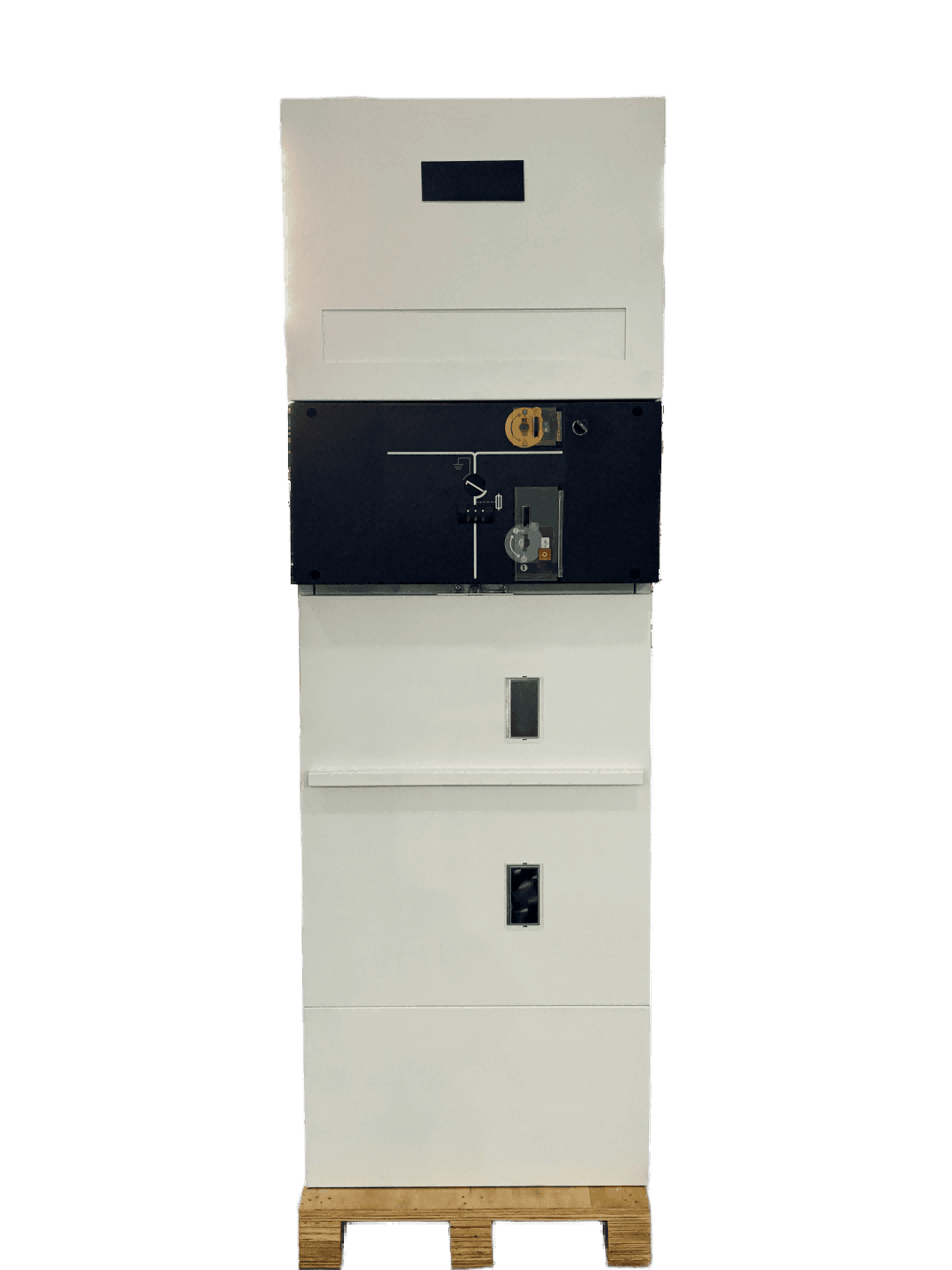
Electrical distribution networks face constant threats: short circuits, overloads, and environmental wear. Safety standards such as IEC 62271-200 and IEEE C37.122 are not arbitrary guidelines—they exist to prevent arc flashes, equipment explosions, and cascading blackouts. A Ring Main Unit (RMU) is the critical node in secondary distribution, controlling power flow and protecting downstream transformers. Low-quality RMUs with substandard insulation, flimsy operating mechanisms, or poor sealing cannot withstand the rigorous tests demanded by these standards. When an internal arc occurs or a fault persists, a non-compliant RMU may rupture, releasing superheated gases and molten metal, endangering personnel and destroying assets. Thus, the codes unequivocally require robust engineering, proven dielectric strength, and fault-make/break capabilities—attributes only a high-quality Ring Main Unit can guarantee.
At Lugao Power Co.,Ltd., we have witnessed how ignoring this principle leads to catastrophic failures. Our decades of manufacturing experience confirm that meeting electrical safety standards is impossible without premium materials, precision assembly, and type-tested validation. A genuine high-quality Ring Main Unit incorporates SF6-insulated or eco-friendly gas insulation, stainless steel tanks, and vacuum interrupter technology. These components survive lightning impulses, temperature extremes, and switching surges. In contrast, counterfeit or budget RMUs often skip internal arc classification (IAC) or use recycled epoxy that cracks under thermal cycling. To achieve compliance with AOR (accessibility, operability, reliability) clauses of modern grid codes, utilities and industrial facilities must source RMUs from certified factories. In this article, we detail the specific standards, failure mechanisms, and why our factory’s approach ensures both safety and long-term profitability.
Contents
- 1. Which International Safety Standards Mandate High-Quality Ring Main Units?
- 2. How Do Inferior Ring Main Units Contribute to Electrical Accidents and System Failures?
- 3. Why Does Our Factory Prioritize Advanced Manufacturing and Testing for Ring Main Units?
- Summary: The Unbreakable Link Between Standards and Premium RMUs
- Frequently Asked Questions (FAQ)
1. Which International Safety Standards Mandate High-Quality Ring Main Units?
The global benchmark for metal-enclosed switchgear and control gear is IEC 62271-200. This standard defines requirements for rated voltage, insulation levels, temperature rise limits, and internal arc classification (IAC). For Ring Main Units specifically, additional clauses from IEC 62271-103 (load switches) and local grid codes apply. Compliance is not optional: any RMU used in public or industrial networks must undergo type tests including dielectric voltage withstand, short-time withstand current, and mechanical endurance. A high-quality Ring Main Unit passes these tests with wide margins. For instance, our factory’s units achieve 42kV power frequency withstand for 12kV systems, well above the 28kV baseline required by many utilities. Below are the critical standards and their demands on RMU construction:
- IEC 62271-200 (Ed.2.0): Requires internal arc classification IAC AFLR (accessible sides, front, rear, low pressure). Only RMUs with reinforced enclosures, pressure relief channels, and arc-resistant fasteners can claim IAC.
- IEC 62271-100: Applies to circuit-breaker function if RMU includes a breaker; requires fault making/breaking capabilities up to 20kA/1s or more.
- IEC 60529 (IP ratings): Demands at least IP3X for indoor and IP54/IP67 for outdoor RMUs. High-quality RMUs use laser-welded tanks and double-sealed O-rings to maintain gas integrity over 30 years.
- IEEE C37.20.3 (North America): Emphasizes fault-closing ratings and voltage surge tests. A premium Ring Main Unit must survive 95kV BIL (basic impulse level) for 15kV class.
- Local grid codes (e.g., ENA TS 41-36 in UK, VDE 0670 in Germany): Often add corrosion resistance, low-temperature operation and seismic withstand. Our factory designs RMUs with -25°C to +50°C ambient range.
Why does this force the selection of high-quality components? Consider the dielectric test: a standard 12kV RMU must sustain 28kV rms for 1 minute without flashover. Cheap RMUs with voids in cast resin or inadequate clearances fail unpredictably. Moreover, internal arc testing simulates a fault of 20kA for 1 second inside the tank—only robust construction (3mm stainless steel, secured cable compartments) prevents rupture. Lugao Power Co.,Ltd. conducts these type tests in independent labs, certifying each design. Without this pedigree, operators risk losing safety certification and legal liabilities. In summary, every safety standard explicitly or implicitly requires high-quality materials, rigorous production control, and third-party verification—traits that separate reliable Ring Main Units from hazardous counterfeits.
Additionally, the rise of smart grids and distributed generation places new stress on RMU insulation coordination. Standards now require enhanced partial discharge monitoring (<10pC). Our factory integrates embedded PD sensors, but only if the basic RMU structure is precision-molded. Substandard units produce high PD levels from day one, accelerating insulation failure. Thus, safety standards are effectively a quality filter: they mandate high-quality engineering for any legally installed Ring Main Unit. For project specifiers, sourcing from a compliant manufacturer such as our facility ensures future-proof operation and insurance approval.
2. How Do Inferior Ring Main Units Contribute to Electrical Accidents and System Failures?
Electrical safety incidents rarely occur spontaneously—they are the final result of accumulated defects and design shortcuts. When a low-quality Ring Main Unit is installed, multiple failure pathways emerge. The most common is dielectric breakdown caused by moisture ingress. RMUs with substandard sealing or single-gasket flanges allow humidity to enter the SF6 or air-insulated compartment. Once internal dew point exceeds -10°C, flashovers occur across solid insulators. We have investigated cases where a 6-month-old RMU exploded due to epoxy creepage, injuring maintenance staff. Another scenario involves inadequate short-time withstand rating: a downstream short circuit draws 16kA for 0.5 seconds, but the busbars inside a fake RMU are undersized (only 40x5mm vs required 80x10mm). The resulting electromagnetic forces bend the bars, causing phase-to-phase fault and fire. Let's break down the distinct hazards:
- Arc flash explosion: Low-quality enclosures lack internal arc relief flaps. Pressure builds to 10 bar, blowing the door off with shrapnel speed exceeding 200 m/s. Standards require IAC rating to avoid this; high-quality RMUs from our factory have calculated pressure relief and flame-quenching chimneys.
- Contact welding & switching failures: Ring Main Unit load switches must break 630A or even 1250A. Inferior silver-tungsten contacts or weak spring mechanisms cause contact welding or restriking. This leads to sustained arcs, burning the switchgear and possibly igniting nearby cables.
- Loss of gas insulation: For SF6-insulated RMUs, a pinhole leak (common in poorly welded tanks) reduces pressure. At 0.8 bar absolute (nominal 1.4 bar), insulation level drops 30%, and a switching surge can puncture the gap. Non-return valves on refilling kits are missing in cheap units, causing gradual emission.
- Cable termination failures: Integrated cable test points and stress cones are poorly machined in low-quality RMUs. High electric field gradients cause tracking along the bushing, ultimately leading to an earth fault.
Real-world data from CIGRE shows 43% of switchgear failures originate from defective insulation or operating mechanisms. When such a failure occurs in a Ring Main Unit, repair costs often exceed the initial saved budget by a factor of 10. Additionally, safety standards require periodic maintenance (thermography, contact resistance measurement). However, low-quality RMUs degrade so fast that even bi-annual checks cannot prevent failure. Our factory builds RMUs with self-lubricating bearings and silver-plated busbars, ensuring mechanical endurance of 5000 operations (double the standard 2000). This is a direct investment in safety.
Furthermore, low-quality Ring Main Unit assembly lacks proper phase barriers. During a cable fault, arc plasma can propagate to adjacent functional units, destroying the entire RMU panel—a phenomenon known as “arc propagation”. Premium designs, like those from Lugao Power Co.,Ltd., include arc-resistant partition walls and metal barriers between cable compartment and busbar compartment. In summary, inferior RMUs directly violate multiple paragraphs of IEC 62271-200, and the price of non-compliance is measured in human lives and business interruption. For any project conscious of safety, selecting a high-quality Ring Main Unit is not a cost; it is the only acceptable risk mitigation strategy.
3. Why Does Our Factory Prioritize Advanced Manufacturing and Testing for Ring Main Units?
At Lugao Power Co.,Ltd., we operate a state-of-the-art production facility where every Ring Main Unit undergoes rigorous end-to-end quality control. Our factory’s motto is “standards are the floor, not the ceiling.” We have invested in fully automated SF6 leak detectors, robotic welding for stainless steel enclosures, and high-voltage partial discharge labs. This commitment stems from the understanding that safety cannot be an afterthought. Below, we outline the key manufacturing and testing processes that ensure each RMU exceeds electrical safety standards. Our transparent process builds confidence among utilities, EPC contractors, and renewable energy developers.
Material selection & design validation: We use only high-grade copper (minimum 99.9% purity), 304L stainless steel (2.5mm thickness for indoor, 3.0mm for outdoor), and VO-grade epoxy resin for bushings. Each batch of incoming materials is tested for conductivity and tensile strength. Our Ring Main Unit design incorporates triple seals on the operating shaft and pressure gauges for live gas monitoring. The insulation coordination is verified by 3D electrostatic field simulation, eliminating any sharp edges.
Assembly line processes: Our factory employs skilled technicians trained in DIN EN ISO 9001 procedures. The assembly of each Ring Main Unit involves five dedicated stations: 1) tank fabrication with helium mass spectrometry leak test (<1×10⁻⁶ mbar·l/s), 2) interrupter & busbar mounting with torque-controlled bolting, 3) mechanism assembly and lubrication, 4) final assembly of cable boxes & interlocks, 5) performance testing. At each station, digital torque readings and gas pressure logs are recorded. This traceability is our guarantee.
Now, look at the key electrical parameters of our best-selling 12kV/24kV Ring Main Unit series (Model LGU-RMU-24). These numbers demonstrate the quality margin over base requirements:
| Parameter | Standard Requirement (IEC min) | Lugao Power RMU Value |
| Rated Voltage (Ur) | 12 kV / 24 kV | 12kV / 24kV / 36kV option |
| Rated Power Frequency Withstand (1 min) | 28 kV (12kV) ; 50 kV (24kV) | 42 kV / 65 kV (dry & wet) |
| Lightning Impulse Withstand (BIL) | 75 kV (12kV) ; 125 kV (24kV) | 95 kV / 150 kV |
| Rated Normal Current (bus/feeder) | 630A | 630A / 1250A available |
| Short-time Withstand Current (3s) | 20 kA | 20 kA / 25 kA (3s) |
| Internal Arc Classification (IAC) | AFLR 20kA/1s | AFLR 20kA/1s + additional rear flame mitigation |
| Mechanical Endurance (load switch) | 2000 operations | 5000 operations (type tested) |
| Protection Degree (enclosure/gas tank) | IP3X / IP67 | IP41 / IP67 (hermetic) |
| SF6 Leak Rate per year | < 0.5% | < 0.1% (helium tested) |
Our factory implements 100% routine testing per IEC 62271-200 including: power-frequency voltage test, partial discharge measurement (≤5pC at 1.2Ur), contact resistance measurement (≤40 µΩ for main circuit), gas tightness test, mechanical operation test (5 full cycles). Additionally, sample units undergo thermal cycling (-25°C to +70°C) and short-circuit making tests at KEMA/CESI labs. With this level of quality, our Ring Main Unit not only satisfies but exceeds the expectations of safety inspectors and network operators. Clients who choose us reduce total ownership costs by eliminating unplanned outages and lawsuits. Our customer-centric approach, combined with local after-sales support, makes us the preferred partner for infrastructure projects across Europe, Asia, and Americas. To date, our factory has delivered more than 15,000 units without a single internal-arc related injury. That is the power of uncompromised quality.
Summary: The Unbreakable Link Between Standards and Premium RMUs
Electrical safety standards exist because electricity, when uncontrolled, is lethal. They demand specific performance metrics—dielectric strength, arc containment, fault making/breaking, and mechanical endurance. Only a high-quality Ring Main Unit can meet these metrics reliably over decades of operation. From our factory’s experience, the upfront premium of a certified RMU is marginal compared to the cost of a single accident, which includes regulatory fines, medical claims, production downtime, and reputational damage. We have proven that consistent application of IEC 62271-200, combined with production excellence at Lugao, delivers RMUs that protect both personnel and assets. Whether you operate a data center, a wind farm, or a utility substation, demanding a high-quality Ring Main Unit is not an option—it is the core of your safety strategy. Remember: shortcuts taken today become the incidents of tomorrow. Choose quality, choose compliance, and partner with a manufacturer that prioritizes life safety above all.
Frequently Asked Questions (FAQ)
Question 1: Why do electrical safety standards specifically require internal arc classification (IAC) for Ring Main Units?
Answer: Internal arc classification (IAC) is mandated because an RMU may experience an internal fault due to e.g., insulation failure or operator error. Without an IAC-rated enclosure, the pressure rise from an arc can rupture the tank, releasing plasma at temperatures exceeding 10,000°C. Standards such as IEC 62271-200 require IAC AFLR to ensure that doors and covers stay locked, hot gases are directed to safe areas, and no parts are ejected. A high-quality Ring Main Unit from a certified factory undergoes full-scale arc testing to prove this capability. Low-quality units lack IAC labeling, meaning they provide zero protection to personnel. Investing in an IAC-certified RMU is the only way to comply with workplace safety regulations (e.g., NFPA 70E).
Question 2: How can I visually identify a low-quality Ring Main Unit that may fail safety standards?
Answer: Key visual red flags include: thin enclosure sheets (below 1.5mm for stainless steel), irregular welding beads, lack of visible pressure relief vents, non-original gas density gauge (or no gauge), and absence of a type-test label. Additionally, low-quality RMUs often have plastic operating mechanisms instead of steel, and missing interlocking systems to prevent access to live parts. At our factory, each Ring Main Unit carries a serial number with test certificates. If a supplier cannot produce IEC type-test reports or internal arc videos, consider that unit non-compliant. Always request third-party test documentation before purchase.
Question 3: Does regular maintenance compensate for buying a low-quality Ring Main Unit instead of a premium one?
Answer: No. While maintenance is vital, it cannot fix fundamental design flaws. A low-quality Ring Main Unit may have insufficient insulation distances, pitting contacts, or micro-leaks in the gas system—issues that cannot be corrected by periodic cleaning or tightening. Standards mandate that equipment must be safe from the outset. In fact, excessive maintenance attempts on a substandard RMU can introduce additional risks, such as stripping threads or misaligning contacts. In contrast, our factory’s high-quality RMUs are designed for “maintenance-free” operation over 10-15 years, aside from visual inspections. Investing in quality drastically reduces lifecycle cost and ensures inherent compliance.
Question 4: What specific tests prove that a Ring Main Unit meets high safety standards?
Answer: The mandatory type tests according to IEC 62271-200 include: dielectric tests (power frequency and lightning impulse), temperature rise test at rated current, short-time withstand and peak withstand current test, internal arc test (IAC), mechanical endurance test (e.g., 2000 operations for load switches), and protection degree (IP) verification. Additionally, factory routine tests for each unit consist of power frequency voltage withstand, partial discharge measurement, contact resistance, gas tightness, and mechanical operation checks. At Lugao Power Co.,Ltd., our Ring Main Unit is subjected to all these tests plus optional seismic and climatic aging. If any test fails, the design is rejected. Only after passing these can we legally mark the unit as compliant.
Question 5: Why should a project engineer specify Lugao Power Co.,Ltd. as the supplier for high-quality Ring Main Units?
Answer: Lugao Power Co.,Ltd. combines 20+ years of switchgear manufacturing expertise with in-house type-testing facilities and international certifications (KEMA, CE, TUV). Our Ring Main Unit offers superior parameters (higher BIL, lower PD, lower leak rate) compared to budget alternatives. We provide full documentation, traceability, and a dedicated technical support team. Moreover, our factory’s quality control includes 100% helium leak detection and partial discharge testing on every unit. By specifying us, engineers reduce liability, ensure grid code compliance, and obtain a product that lasts 30 years. Request a quotation or sample evaluation to see the quality difference directly – contact our team for project-specific solutions and free technical consulting. Your safety is our business.