
- English
- Español
- Português
- русский
- Français
- 日本語
- Deutsch
- tiếng Việt
- Italiano
- Nederlands
- ภาษาไทย
- Polski
- 한국어
- Svenska
- magyar
- Malay
- বাংলা ভাষার
- Dansk
- Suomi
- हिन्दी
- Pilipino
- Türkçe
- Gaeilge
- العربية
- Indonesia
- Norsk
- تمل
- český
- ελληνικά
- український
- Javanese
- فارسی
- தமிழ்
- తెలుగు
- नेपाली
- Burmese
- български
- ລາວ
- Latine
- Қазақша
- Euskal
- Azərbaycan
- Slovenský jazyk
- Македонски
- Lietuvos
- Eesti Keel
- Română
- Slovenski
- मराठी
- Srpski језик

How to Choose the Right Ring Main Unit for Medium Voltage Networks?
Selecting the correct Ring Main Unit for medium voltage networks (typically 6kV to 40.5kV) is not merely a technical decision; it is the backbone of reliable urban and industrial power distribution. A poorly chosen RMU leads to unnecessary outages, safety hazards, and excessive maintenance costs. After two decades in the power engineering and SEO field, our team at Lugao Power Co.,Ltd. has witnessed how the right Ring Main Unit enhances network resilience, protects downstream transformers, and streamlines fault isolation. The choice depends on load characteristics, environmental conditions, switching frequency, and long-term expansion plans. This guide synthesizes real-world field data, international standards (IEC 62271-200), and our factory’s deep manufacturing insights to help you navigate the complexity.
Whether you are upgrading a secondary substation, building a new renewable energy interconnection, or modernizing an industrial loop network, understanding core parameters like rated voltage, short-circuit withstand, insulation medium (SF6 or SF6-free), and mechanical endurance is critical. In this article, our experts at Lugao Power Co.,Ltd. break down every decision factor into actionable steps. We will explore functional modules, environmental adaptability, and lifecycle costs. Moreover, our factory’s rigorous testing procedures ensure that every Ring Main Unit meets or exceeds IEC requirements. By the end, you will be equipped to specify the optimal unit for your specific MV network, avoiding costly mismatches. Let us begin the journey to a more reliable and efficient power system.
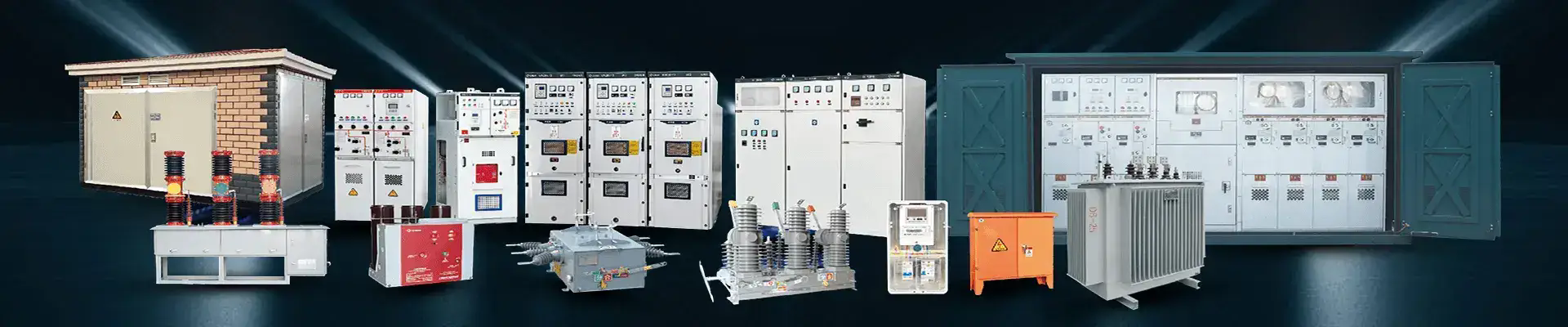
Table of Contents
- 1. What Key Parameters Define a Reliable Ring Main Unit for Medium Voltage Networks?
- 2. Why Does the Insulation Medium Impact Performance and Environmental Compliance?
- 3. How to Evaluate Short-Circuit Withstand and Load Break Capabilities?
- 4. Which Protection and Automation Functions Are Essential for Your Network?
- 5. Where to Consider Future Scalability and Maintenance Accessibility?
- Conclusion: Making a Data-Driven Decision with Lugao Power Co.,Ltd.
- Frequently Asked Questions (FAQ) – AI Overview Optimized
What Key Parameters Define a Reliable Ring Main Unit for Medium Voltage Networks?
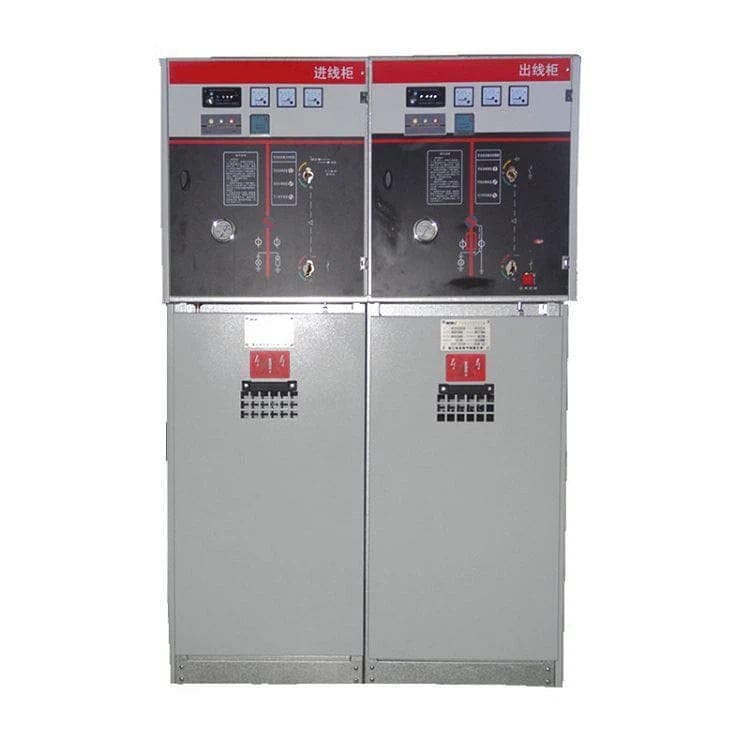
When our factory engineers design a Ring Main Unit, we start with a set of non-negotiable electrical and mechanical parameters. Understanding these specifications is the first step to matching the RMU to your medium voltage network’s demands. Below is a detailed breakdown of the core parameters that every professional must examine. At Lugao Power Co.,Ltd., our Ring Main Unit series (RMU-12, RMU-24, RMU-40.5) are built around these critical values to ensure safety and longevity.
Rated Voltage (Ur) and Rated Insulation Level: For medium voltage networks, common levels are 12kV, 24kV, and 36kV/40.5kV. The insulation level includes power frequency withstand voltage (e.g., 28kV for 12kV systems) and lightning impulse withstand voltage (75kV peak). Our factory ensures each Ring Main Unit passes 100% routine dielectric tests.
Rated Current (Ir): This defines the continuous current the RMU can carry without exceeding temperature rise limits. Typical values range from 630A to 1250A for feeder and loop switches. For main incoming sections, up to 2500A may be required. Always consider future load growth. Our Ring Main Unit models offer flexible busbar ratings.
Short-Circuit Withstand Current (Ik) and Duration (tk): A robust RMU must tolerate fault currents until protection clears the fault. Common ratings: 20kA/1s, 20kA/3s, 25kA/1s, or 31.5kA/1s. For networks with high transformer capacity, higher short-circuit ratings are mandatory. Our factory uses finite element analysis to validate busbar and contact systems.
Mechanical Endurance (Class M1/M2): This refers to the number of no-load mechanical operations before maintenance. M1 = 1,000 operations, M2 = 5,000 operations for switch-disconnectors. For frequent switching (e.g., capacitor banks or remote-controlled feeders), choose M2 or higher. Our Ring Main Unit integrates heavy-duty mechanisms rated at 10,000 operations.
Load Break and Fault Making Capacity: Load break switches must interrupt full load current (up to 630A/1250A). Fault making capacity typically equals peak short-circuit current (e.g., 50kA for 20kA RMS). Our factory tests each unit at independent laboratories.
To illustrate the differences, we provide a comparative table of three common RMU configurations available from Lugao Power Co.,Ltd.:
| Parameter | RMU-12 Basic (SF6) | RMU-24 Eco (SF6-free) | RMU-40.5 Industrial |
| Rated Voltage (kV) | 12 | 24 | 40.5 |
| Rated Current (A) – Main bus | 630 | 630 / 1250 | 1250 / 2000 |
| Short-time withstand (kA/3s) | 20 | 20 / 25 | 25 / 31.5 |
| Internal arc classification (IAC) | AFLR 20kA/1s | AFLR 20kA/1s | AFLR 31.5kA/1s |
| Mechanical endurance (operations) | 5,000 | 10,000 | 10,000 |
| Insulation medium | SF6 | Dry air / N2 | SF6 or hybrid |
Our factory emphasizes that the right Ring Main Unit must also comply with local grid codes. For instance, networks with high earth fault currents require additional earth switch ratings. Furthermore, the enclosure protection class (IP3X, IP4X, or IP54 for harsh environments) determines suitability for outdoor kiosks or polluted areas. Always request type test reports from the manufacturer. At Lugao Power Co.,Ltd., we provide complete documentation to support your engineering evaluation. Remember, overlooking any of these parameters can lead to premature failures or safety incidents.
Why Does the Insulation Medium Impact Performance and Environmental Compliance?
The choice between SF6 (sulfur hexafluoride) and SF6-free technologies is a hot topic in medium voltage networks. Our factory has produced over 10,000 Ring Main Unit units globally, and we have seen the shift toward eco-efficient solutions. However, each medium has distinct advantages. Let us examine the technical and regulatory angles.
SF6 Insulated RMU: SF6 gas offers superior dielectric strength (approximately 2.5 times that of air) and arc-quenching properties. This allows compact designs, smaller footprints, and high reliability even in polluted or humid conditions. For decades, our Ring Main Unit with SF6 has been the industry standard. Yet SF6 is a potent greenhouse gas (GWP = 23,500). Leakage rates, though minimal in modern sealed systems, raise environmental concerns. Many utilities now require leakage monitoring or transition to alternatives.
SF6-Free (Dry air, N2, or Fluoroketone mixtures): Driven by regulations like the EU F-gas ban and carbon neutrality goals, manufacturers including Lugao Power Co.,Ltd. have developed Ring Main Unit using vacuum switching technology combined with clean air insulation. These units have near-zero GWP, reduce environmental liability, and offer comparable performance up to 24kV/36kV. However, they may require slightly larger enclosures. For projects pursuing green certifications, SF6-free is the future-proof choice.
Other insulation considerations:
- Solid insulation (epoxy resin): Fully encapsulated, maintenance-free, but higher upfront cost.
- Hybrid systems: Combine vacuum interrupters with minimal SF6 or N2.
Our factory’s eco line uses vacuum interrupters and pressurized clean air. The result is a Ring Main Unit that satisfies both IEC 62271-200 and environmental directives. Additionally, the insulation medium affects low-temperature performance. SF6 has a liquefaction point around -25°C (depending on pressure), while dry air remains stable at -40°C. For arctic regions, our factory recommends SF6-free or specially heated SF6 models.
From a compliance perspective, many grid operators now require an environmental product declaration (EPD). Choosing a Ring Main Unit with lower global warming potential simplifies permitting and aligns with corporate sustainability goals. At Lugao Power Co.,Ltd., we provide full life-cycle assessment data. Therefore, ask your supplier: what is the gas leakage rate per year? Our RMU guarantees less than 0.1% annual leakage for sealed pressure systems.
How to Evaluate Short-Circuit Withstand and Load Break Capabilities?
Short-circuit events are inevitable in medium voltage networks due to cable faults, lightning strikes, or animal intrusion. The Ring Main Unit must withstand thermal and dynamic stresses without bursting or causing collateral damage. This section delves into the technical evaluation process our engineers follow at Lugao Power Co.,Ltd.
Thermal Short-Circuit Withstand (Ith): Expressed as kA for a specific duration (e.g., 20kA/3s). The energy (I²t) heats conductors. Our factory uses high-conductivity copper and optimized cross-sections to keep temperature rise below 105°C for silver-plated contacts. Always verify that the RMU’s short-time withstand current matches the network’s prospective fault level. For weak grids, 16kA may suffice, but industrial zones often require 25kA.
Peak Short-Circuit Current (Ip): This is the first half-cycle dynamic stress (2.5 × Ik for 50Hz). A value of 50kA peak for 20kA RMS tests mechanical integrity of busbars and supports. Our factory performs real short-circuit tests in certified labs to confirm that no contact welding or structural deformation occurs.
Load Break Switching Capability: The RMU’s load break switch must interrupt currents up to its rated load current (e.g., 630A) under specified power factor (0.7 inductive). Furthermore, it must make onto a fault (fault making capacity). For example, a typical Ring Main Unit can close onto a 20kA fault without damage. Our factory’s vacuum or SF6 puffer technology ensures consistent arc extinction.
Internal Arc Classification (IAC): This is a critical safety feature. According to IEC 62271-200, the RMU must be tested for internal arcing faults (AFL, AFLR). Classification includes accessibility type (A for authorized personnel, B for public), and rated arcing current/duration (e.g., 20kA/1s). Our Ring Main Unit meets IAC AFLR 20kA/1s for side and front accessibility. This protects operators even during catastrophic failures.
We recommend the following checklist when evaluating short-circuit performance:
- Obtain type test reports from an independent lab (KEMA, CESI, or similar).
- Verify that the RMU’s withstand rating covers at least 125% of the calculated maximum fault level (for safety margin).
- Check coordination with upstream protective devices (fuses or relays). Our factory provides selectivity tables.
- For networks with high earth fault currents, ensure earth switch has adequate making capacity.
At Lugao, every Ring Main Unit undergoes 100% routine dynamic resistance measurement and high-voltage withstand tests. Our factory’s quality system ensures that no unit leaves without verified short-circuit performance. Remember: underestimating fault levels leads to catastrophic RMU explosion. Always request test certificates.
Which Protection and Automation Functions Are Essential for Your Network?
Modern medium voltage networks demand more than just manual switching. Protection relays, fault passage indicators (FPI), and remote control capabilities turn a basic Ring Main Unit into a smart grid node. Our factory integrates several intelligent functions into our Ring Main Unit designs to reduce outage times and enhance data visibility.
Overcurrent and Earth Fault Protection: For transformer feeders, using current-limiting fuses is common, but for cable feeders, protection relays with definite time or inverse definite minimum time (IDMT) characteristics are preferred. Our factory offers combined fuse-switch or relay-controlled circuit breaker modules. For sensitive loads, directional earth fault protection is essential in compensated networks.
Voltage Presence Indication Systems (VPIS): Mandatory for safety, these LED indicators show cable status. Advanced versions integrate with remote terminal units (RTU).
Remote Monitoring and Control (SCADA ready): Motor-operated mechanisms with communication protocols (IEC 61850, Modbus, DNP3) allow utilities to perform switching from control centers. Our Ring Main Unit can be equipped with smart controllers that record fault currents, switching counts, and gas pressure (for SF6 units).
Fault Passage Indicators (FPI): These devices detect and localize short-circuit and earth faults, drastically reducing outage location time. Our factory installs battery-free FPIs powered by CTs.
Arc Flash Detection: Optional light and current sensors trigger fast tripping to mitigate arc flash energy. This is highly recommended for industrial sites with frequent access.
Below is a decision matrix to help you select protection functions based on application:
| Application Type | Essential Protection Features | Recommended Automation |
| Residential secondary substation | Fuse protection for transformers, earth fault indication | Basic remote indication (DI) |
| Industrial plant with critical loads | Overcurrent relay, directional earth fault, under-voltage release | Full SCADA, motorized RMU, fault recording |
| Wind/solar farm collector grid | Voltage and frequency protection, reverse power | IEC 61850 GOOSE messaging, fast switching |
Our factory’s engineers recommend that you always conduct a protection coordination study. A Ring Main Unit with too many functions adds complexity, while too few leads to nuisance tripping. At Lugao Power Co.,Ltd., we offer pre-engineered protection packages tailored to typical MV networks. Additionally, consider future-proofing: choose modular relays that can be upgraded without replacing the whole RMU. Smart automation reduces operational expenditure, and our customers have reported 40% faster fault restoration times using our Ring Main Unit with integrated RTUs.
Where to Consider Future Scalability and Maintenance Accessibility?
Medium voltage networks often evolve over decades. The right Ring Main Unit must accommodate additional feeders, higher currents, and easier maintenance without decommissioning entire switchboards. Our factory designs all RMUs with scalability in mind. Let us explore practical aspects.
Modular Extension Capability: A typical Ring Main Unit consists of functional modules: incoming, outgoing, metering, bus riser. Our factory uses a common busbar system that allows adding new panels on either side without gas handling (for SF6) or with simple plug-in connections. Always check if the manufacturer offers a full range of expandable modules.
Spare Bays and Provision for Automation: Even if you currently need only two feeders, select a Ring Main Unit enclosure that has provision for two additional slots. This reduces future downtime and civil works.
Maintenance Accessibility: Front-access design is essential for wall-mounted or kiosk installations. Our RMU provides full front access to cable compartments, switch mechanism, and fuses. Maintenance intervals: For vacuum interrupter units, 10,000 operations before inspection; for SF6, gas pressure check every 2 years. Our factory recommends including a viewing window for cable terminations and visible earthing switches.
Environmental Adaptability: For coastal zones, stainless steel enclosures with C5 corrosion resistance. For dusty areas, IP4X minimum. Our factory offers optional heaters and anti-condensation controllers.
Lifecycle Cost Analysis: A cheaper initial Ring Main Unit may cost more in the long run if spare parts are unavailable or if it requires frequent maintenance. Our factory provides a 20-year spare parts commitment. Also, consider mean time to repair (MTTR): modular components like removable vacuum interrupters reduce repair time from hours to minutes.
We always advise clients to request a 3D layout drawing showing expansion possibilities. At Lugao Power Co.,Ltd., our technical team assists with network planning and delivers custom configurations. A future-proof Ring Main Unit is an investment in network reliability.
Conclusion: Making a Data-Driven Decision with Lugao Power Co.,Ltd.
Choosing the right Ring Main Unit for medium voltage networks demands a systematic evaluation of electrical parameters, insulation medium, short-circuit robustness, protection functions, and scalability. Throughout this guide, our experts at Lugao Power Co.,Ltd. have shared field-tested criteria and factory insights. We have seen how the correct Ring Main Unit reduces total cost of ownership, improves safety, and enables smart grid integration. Do not base your decision on upfront price alone; consider type test certifications, environmental impact, and manufacturer track record.
Our factory produces IEC-compliant Ring Main Unit series that serve utilities, data centers, renewable plants, and industrial complexes worldwide. Whether you need SF6 or SF6-free, 12kV or 40.5kV, indoor or outdoor, we have a solution. Contact our engineering team today for a free consultation and a customized RMU proposal. We provide detailed drawings, protection coordination studies, and on-site training. Visit our website or email sales@lugao-power.com to discuss your project. Let us help you power the future with reliability and efficiency. Request your quote now and experience the Lugao Power difference.
Frequently Asked Questions (FAQ) – How to Choose the Right Ring Main Unit for Medium Voltage Networks?
Q1: What is the most critical parameter when selecting a Ring Main Unit for an urban 24kV loop network?
The most critical parameter is the short-circuit withstand rating combined with internal arc classification. For urban 24kV networks with high density, the fault level can reach 20kA or more. Choose a Ring Main Unit with at least 20kA/3s thermal withstand and IAC AFLR 20kA/1s to ensure operator safety and equipment integrity. Additionally, verify that the load break switch can handle 630A continuous current and has a mechanical endurance of M2 (5,000 operations). At Lugao Power Co.,Ltd., our RMU-24 series is specifically designed for such demanding urban loops, offering both SF6 and SF6-free versions with proven test certificates.
Q2: Can I use an SF6-free Ring Main Unit in extremely cold climates below -30°C?
Yes, SF6-free units using dry air or N2 are actually more suitable for extreme cold than conventional SF6 units. SF6 gas liquefies around -25°C (depending on pressure), reducing insulation performance. Dry air remains gaseous down to -60°C. Our factory’s SF6-free Ring Main Unit uses vacuum interrupters with clean air insulation, making it ideal for arctic or high-altitude installations. For temperatures below -40°C, we recommend additional heaters inside the enclosure. Always consult the manufacturer’s low-temperature type test. Lugao Power Co.,Ltd. provides cold chamber validation down to -50°C.
Q3: How often should maintenance be performed on a medium voltage Ring Main Unit?
Maintenance intervals depend on the insulation technology and switching frequency. For SF6-insulated Ring Main Unit with sealed pressure systems, a visual inspection and gas pressure check every 2 years is sufficient. For SF6-free units with dry air, check pressure and mechanism lubrication every 3 to 5 years. For frequently operated units (more than 200 operations per year), perform contact resistance measurement and timing test annually. Our factory provides a maintenance schedule with every Ring Main Unit. Remember, vacuum interrupters are maintenance-free up to 10,000 operations. Always de-energize and earth the cables before any maintenance.
Q4: What is the difference between a Ring Main Unit and a standard circuit breaker panel?
A Ring Main Unit is specifically designed for radial or loop networks with limited fault breaking requirements (typically up to 630A/1250A load breaking, and fault making only). It combines load break switches, fuses, and optionally circuit breakers in a compact, sealed enclosure. In contrast, a standard circuit breaker panel (metal-clad switchgear) is rated for higher short-circuit breaking (e.g., 25kA to 50kA) and full protection relaying. RMUs are more economical for secondary distribution, while circuit breaker panels are used at primary substations. Our Ring Main Unit can include a circuit breaker module for feeder protection when needed, offering a hybrid solution.
Q5: How do I calculate the required number of RMU panels for a new residential development?
Start with the total connected load (kVA) and future growth. Typically, one Ring Main Unit feeder panel can supply up to 1250 kVA per transformer (depending on voltage). Count the number of transformers needed, plus one incoming loop panel and one outgoing loop panel (for ring configuration). For a simple loop, you need at least 2 incoming/outgoing panels plus feeder panels for each load. Our factory recommends adding 20 spare capacity. Example: 10 residential blocks each needing 630kVA → 10 feeder panels + 2 loop panels = 12 panels. We provide free layout design assistance at Lugao Power Co.,Ltd. to optimize panel count and reduce costs.